 Web Hosting
 Windows HostingBuilt for Windows apps and websites – stability, speed and flexibility
 Reseller HostingLaunch a hosting business without technical skills or expensive infrastructure
 Affiliate ProgramRefer customers and earn commissions from sales across our platform
 Domain SearchFind and secure a domain name in seconds with our quick lookup tool
 CO ZA Domains
 All DomainsExplore domain names from over 324 TLDs globally – all in one place
 Free Whois Lookup Tool South Africa
 VPS
VPS Website Builder
 Online ShopSet up a sleek eCommerce store with zero coding knowledge
 SSLs
SSLs SupportAccess help articles, how-tos, and everything about our services
 Blog
Blog Contact UsReach our team instantly via live chat or drop us an email
Truehost and Afrihost are two of the more visible web hosting providers serving the South African market.
Both running locally hosted infrastructure and both competing for the same crowd of bloggers, small businesses, and developers looking for somewhere to put a website.
The honest answer to which is better isn’t a single name, it depends on what differs between the two, and which of those differences actually matter for your site.
Hosting prices in particular can shift depending on
- the billing period,
- introductory promotions,
- and what happens at renewal,
so price is where this comparison starts, since it’s usually the first thing South African buyers check before anything else.
Table of Contents
Truehost vs Afrihost Web Hosting: Features Compared
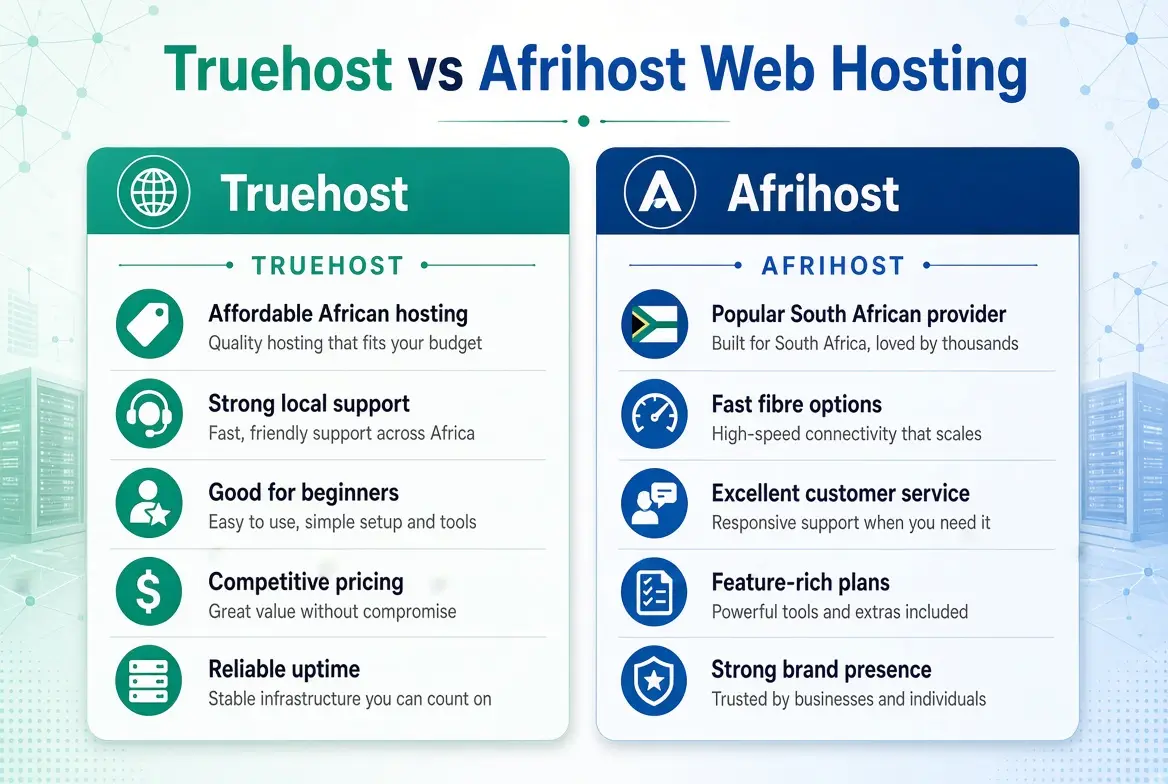
| Feature | Truehost | Afrihost |
|---|---|---|
| Starting price | R 35.00/month (R 33.00/month on a triennial term) | R79/month, billed monthly |
| Storage | 30 GB SSD on the entry plan | 1 GB on the entry Linux plan |
| Bandwidth | Unlimited on all shared plans | Unlimited web traffic |
| Performance | NVMe/SSD storage, cPanel-based shared environment | Locally hosted shared environment, proprietary control panel |
| Support | 24/7 via live chat, email, and phone | 24/7 via phone, WhatsApp, live chat, and email |
| Scalability | Starter, Pro, and Unlimited shared tiers, plus VPS | Eight shared tiers (Home and Pro ranges), plus cloud and dedicated hosting |
With the table out of the way, here’s the detailed breakdown.
1) Cost and Pricing
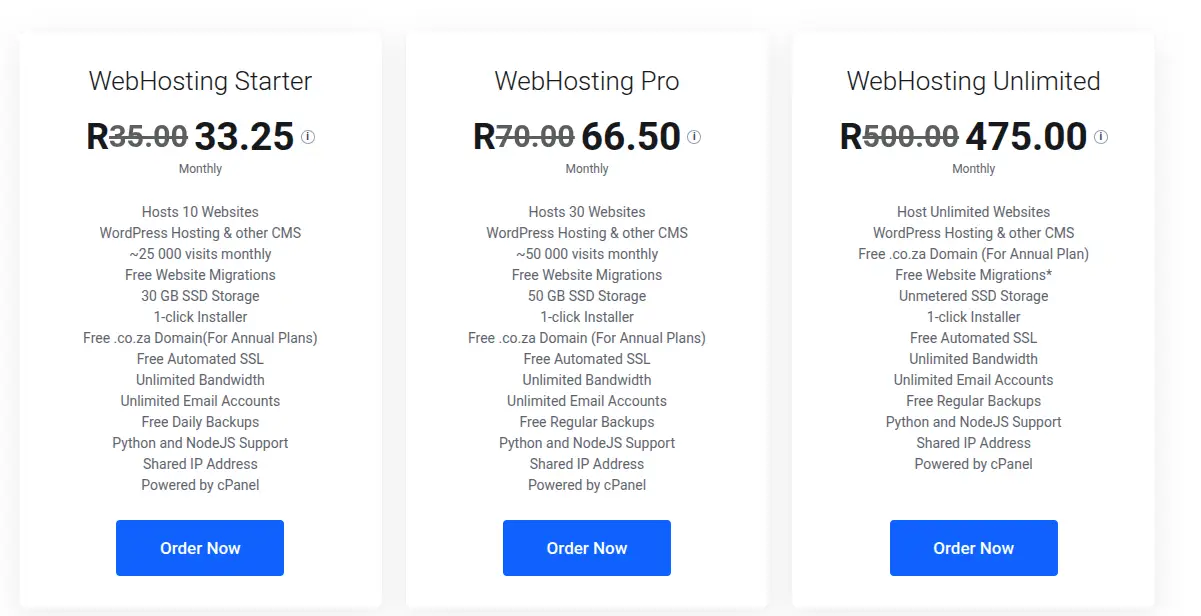
Truehost’s entry-level shared plan, Webhosting Starter, is listed at R 35.00 per month on the standard monthly rate, dropping to roughly R 33.00 per month when billed on a triennial term.
That entry plan includes 30 GB of SSD storage, cPanel, free automated SSL, unlimited bandwidth, unlimited email accounts, a free one-click installer, and free website migration. Annual billing also comes with a free .co.za domain.
The mid-tier Pro plan runs R 70.00 per month standard (around R 50.00 per month triennially) with 50 GB of storage, and the top-tier Unlimited plan sits at R 500.00 per month standard (roughly R 236.11 per month triennially) with unmetered storage and no cap on the number of websites.
Afrihost’s shared hosting starts from R79 per month for the entry-level Bronze Home Linux package, billed strictly month to month with no long-term contract.
That entry plan includes 1 GB of storage, unlimited web traffic, unlimited subdomains, 50 email accounts, one MySQL database, the Softaculous installer, and backups, along with a free .co.za domain for the first year.
One thing worth flagging clearly: Afrihost’s published packages don’t bundle a free SSL certificate into the base price the way Truehost’s plans do, so that’s a cost to budget for separately if your site needs one.
2) Storage and Hosting Resources
Truehost’s tiers scale from 30 GB SSD on Starter to 50 GB on Pro and unmetered storage on Unlimited, all running on SSD or NVMe storage depending on the plan.
Afrihost’s Linux packages scale more gradually across its eight tiers, starting at 1 GB on Bronze Home and moving up through Silver, Gold, and Platinum, with the Platinum Pro plan reaching 50 GB and unlimited email accounts and MySQL databases.
CPU, RAM, and process limits aren’t published in detail on either provider’s public shared hosting pages.
Which is fairly typical for shared hosting generally, resource allocation on shared plans tends to be managed dynamically rather than advertised as a fixed number.
What is clear from the published specs is that Truehost’s entry plan offers meaningfully more storage for a similar or lower price point than Afrihost’s comparable tier.
3) Website Performance
Both providers host locally in South Africa, which helps with latency for South African visitors regardless of which one you pick.
Truehost’s shared plans run on SSD storage, and its plans are built around cPanel, a widely used and well-optimized hosting environment.
Afrihost’s infrastructure is also locally hosted, with its own website control panel and ClientZone management portal handling day-to-day account administration.
Neither provider publishes independently verified speed benchmarks alongside their plans, so it wouldn’t be fair to call one simply faster without reliable comparative testing behind that claim.
What can be said with confidence is that storage technology, server location, and how a hosting environment handles caching and concurrent visitors all influence load times more than the brand name on the invoice, and both providers are working with broadly similar shared hosting fundamentals.
4) WordPress Hosting
Truehost’s shared plans include one-click WordPress installation through Softaculous, along with free SSL, free migration, and daily or weekly backups depending on the plan.
Afrihost’s Linux packages also include the Softaculous installer for WordPress and other applications, and its Pro-tier Linux plans add access to a website builder that the Home-tier and Windows Pro plans don’t include.
Neither provider’s published shared hosting pages describe a dedicated, fully managed WordPress product with built-in staging environments or WordPress-specific caching layers.
The kind of thing you’d typically find on specialist WordPress hosting rather than general shared hosting.
For a standard WordPress site, both providers cover the basics, installation, backups, and SSL (with SSL costing extra on Afrihost’s side), but neither is positioning itself as a dedicated managed WordPress host on their standard shared tiers.
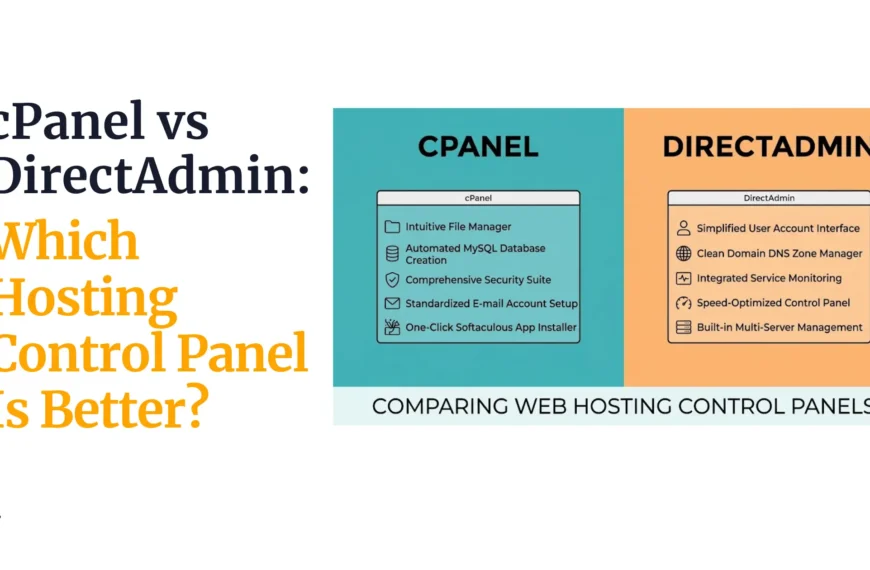
5) cPanel and Ease of Management
This is one of the clearer differences between the two.
Truehost’s shared hosting plans run on cPanel, the widely used industry-standard control panel.
Covering file management, domain and DNS management, email accounts, databases, one-click installers, backups, and SSL, all from one familiar interface.
Afrihost’s published shared hosting pages describe management through Afrihost’s own proprietary Website Control Panel, accessed via their ClientZone portal, rather than cPanel.
Functionally it covers similar ground, email, files, backups, domain settings, but it isn’t the same interface.
Which is important if you’ve used cPanel elsewhere and want that familiarity to carry over, or if you’re relying on cPanel-specific tutorials and documentation.
Beginners with no prior hosting experience likely won’t notice much difference either way, but anyone migrating from a cPanel-based host may find Truehost the more familiar move.
6) Website Migration
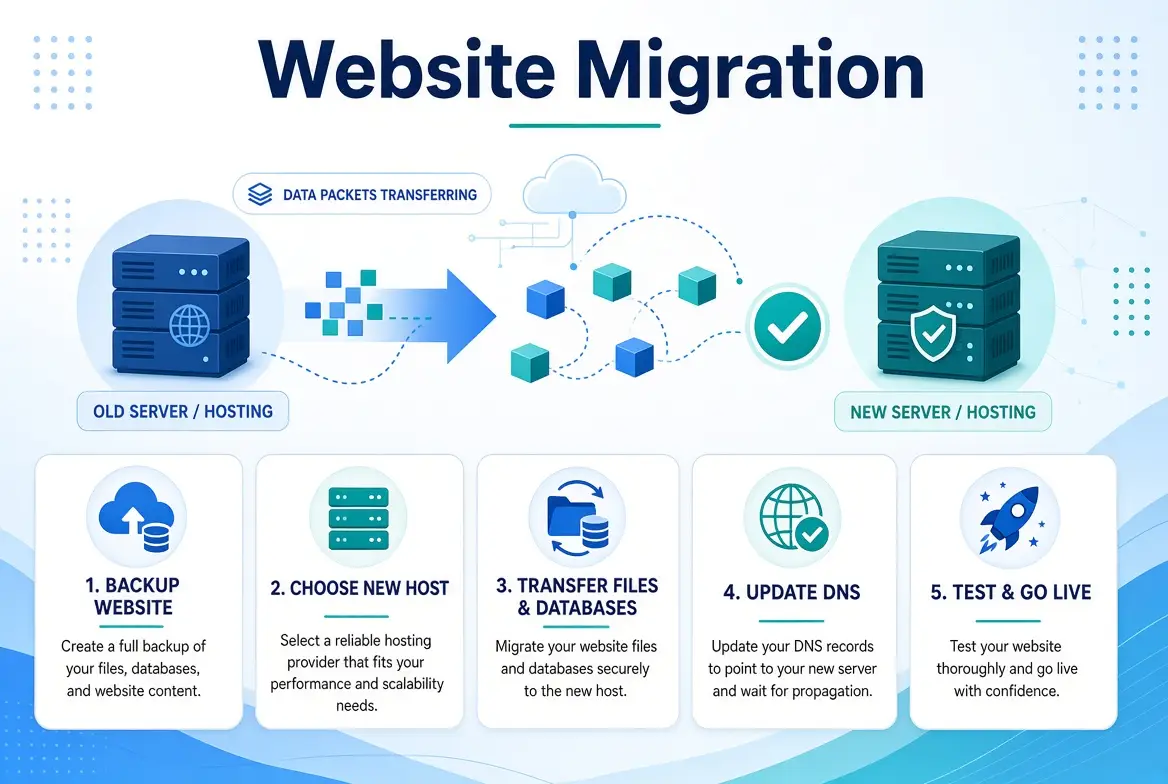
Truehost advertises free website migration as a standard inclusion across its shared hosting plans, covering the transfer of files, databases, and email from an existing host.
Afrihost’s published shared hosting pages focus more on setup and account features than migration specifics.
And don’t make the same explicit free-migration offer on the general shared hosting page.
For anyone currently hosted elsewhere in South Africa and considering a switch, that’s a meaningful practical difference.
Truehost’s stated migration service removes a chunk of the technical work of moving a live site, while Afrihost’s process would need to be confirmed directly with their support team before switching.
7) Security
Truehost bundles free automated SSL into every shared hosting plan, along with backups and cPanel’s built-in security tools.
Afrihost’s Bronze Home plan does not include a free SSL certificate by default, based on their published package details.
So that’s an additional cost on Afrihost’s side if your site needs one, which, for anything handling customer information or payments, it generally should.
Beyond SSL, both providers list standard shared hosting security measures like firewalls, anti-spam, and anti-virus protection through their respective control panels, and both offer backups as part of their packages.
Specific details like DDoS protection or malware scanning aren’t spelled out in detail on either provider’s general shared hosting pages.
So it’s worth confirming directly with either provider if that level of protection matters for your site.
8) Backups and Website Recovery
Both providers list backups as part of their shared hosting packages.
Truehost’s plans include backups as a standard feature across its shared tiers, alongside free SSL and free migration.
Afrihost’s Bronze Home plan also lists backups among its included features.
Neither provider’s public shared hosting page spells out exact backup frequency, retention periods, or whether restoring a backup carries any additional cost, details worth confirming directly before you need them in an emergency.
One practical point worth remembering regardless of which provider you choose: hosting backups shouldn’t be treated as the only copy of your website’s data. Keeping an independent backup, whether that’s a local copy or a separate cloud backup service, is good practice no matter how solid a host’s own backup system is.
9) Email Hosting

Truehost’s shared plans include unlimited email accounts across all tiers, giving you room for addresses like [email protected] and [email protected] without a per-mailbox cap.
Afrihost’s Bronze Home plan includes 50 email accounts, scaling up through its higher tiers to unlimited accounts on the Platinum Pro plan.
Both providers include webmail access and standard email management through their respective control panels as part of the hosting package rather than as a separate product.
Which is the more practical setup for most small businesses that just need working email tied to their domain rather than a dedicated enterprise email platform.
10) Developer Features
Shared hosting on either provider is generally aimed at standard website and WordPress use rather than deep developer customization, SSH access, root-level configuration.
And similar features tend to sit behind VPS or dedicated hosting rather than the entry-level shared tiers on most South African hosts.
And neither Truehost’s nor Afrihost’s published shared hosting pages advertise SSH or root access as standard shared hosting inclusions.
Both do offer MySQL databases and one-click installers (Softaculous) on their shared plans, which covers most standard WordPress and CMS development needs.
For anything requiring SSH, custom server configuration, or root access, both providers’ VPS lines are the more relevant comparison.
And Truehost’s VPS plans do list root access as standard, whereas Afrihost’s equivalent offerings would need to be confirmed directly for the same level of access.
11) Scalability
Truehost’s progression runs from its Starter, Pro, and Unlimited shared tiers up into VPS hosting, with both managed and unmanaged options and full root access on its VPS plans.
Afrihost’s shared hosting spans eight tiers across its Home and Pro ranges, and the company also offers self-managed cloud hosting with tiers scaling from a Bronze package (100 GB storage, 1 vCPU, 2 GB RAM) up to larger configurations, plus dedicated server hosting for anyone needing a full physical machine.
A website might outgrow shared hosting because of CPU, RAM, database load, or the number of concurrent visitors it needs to handle, not simply because it has run out of storage or bandwidth.
Both providers offer a real path upward, shared to VPS to (in Afrihost’s case) cloud or dedicated infrastructure, so neither leaves you stuck once a site outgrows its starting plan.
12) Customer Support
Both providers advertise 24/7 support.
Truehost lists support availability through live chat, email, and phone.
Afrihost has built a strong reputation specifically around customer service, with multiple industry awards for service quality and a support setup that includes phone, WhatsApp, live chat, and email, reflected in a large volume of positive customer reviews centered specifically on support responsiveness.
Without independently verified, published response-time data from either provider, it wouldn’t be accurate to claim one definitively responds faster than the other.
What can be said is that Afrihost has built a notably strong public reputation around its support experience specifically, which is worth factoring in if responsive customer service is a priority alongside the technical specs.
13) Uptime and Reliability
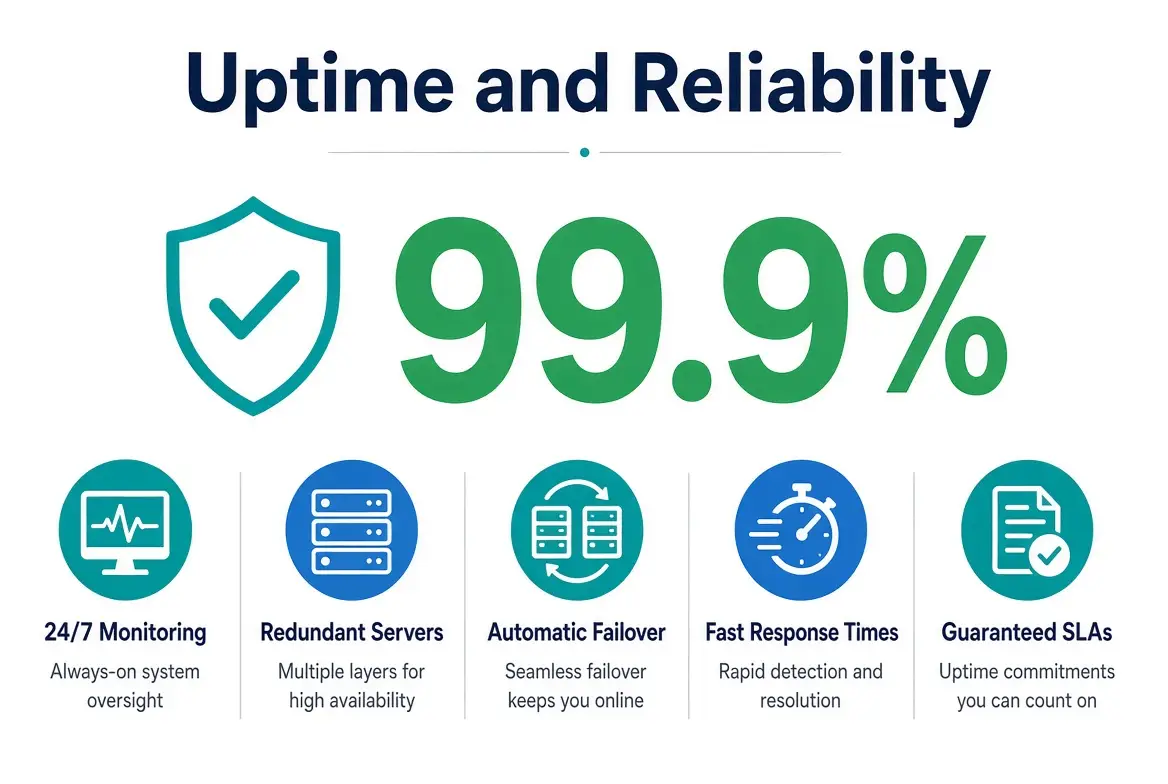
Both providers run their own local South African infrastructure, which supports reliability for a South African audience by keeping the physical distance between server and visitor short.
Specific uptime guarantees and what they actually cover, whether that’s a percentage figure with defined exceptions, or credits owed if the threshold isn’t met, are the kind of detail that’s worth reading directly from each provider’s terms rather than assuming from marketing language.
A published uptime guarantee, whatever the number, is not the same thing as a promise of zero downtime, and the fine print behind the number is where the real commitment actually lives.
Truehost vs Afrihost: Which Web Hosting Provider Should You Choose?
Neither provider is universally better than the other. What the comparison above shows is a fairly clear set of trade-offs:
Truehost’s entry-level plan is cheaper, comes with considerably more storage, bundles in free SSL and free migration, and runs on the widely familiar cPanel.
Afrihost costs more at the entry tier and offers less storage for that price, but is billed strictly month to month with no long-term commitment required, and has built a strong reputation specifically around its customer support experience.
The right choice comes down to
- your own budget,
- what your website actually needs in terms of storage and resources,
- how comfortable you are with cPanel versus a different control panel,
- and how much your site is likely to grow over the next year or two.
A small brochure site with modest traffic has very different requirements from a growing WordPress blog or an online store planning to scale.
If a Truehost plan matches your budget, the resources your site needs, and the growth you’re expecting, it’s worth exploring Truehost’s South Africa hosting plans and choosing the package that fits.