 Web Hosting
 Windows HostingBuilt for Windows apps and websites – stability, speed and flexibility
 Reseller HostingLaunch a hosting business without technical skills or expensive infrastructure
 Affiliate ProgramRefer customers and earn commissions from sales across our platform
 Domain SearchFind and secure a domain name in seconds with our quick lookup tool
 CO ZA Domains
 All DomainsExplore domain names from over 324 TLDs globally – all in one place
 Free Whois Lookup Tool South Africa
 VPS
VPS Website Builder
 Online ShopSet up a sleek eCommerce store with zero coding knowledge
 SSLs
SSLs SupportAccess help articles, how-tos, and everything about our services
 Blog
Blog Contact UsReach our team instantly via live chat or drop us an email
You’re staring at two hosting quotes. One’s cloud, one’s dedicated, and the prices land close together.
The specs next to them tell two completely different stories. That gap is exactly where most South African businesses get stuck.
Cloud hosting and a dedicated server solve different problems, even when their price tags look similar. One flexes with your traffic.
On the other hand, you get a whole machine and ask nothing of anyone else. Picking between them means looking past the sticker price toward how your site actually behaves.
If you run a business in South Africa, the choice rarely comes down to price alone. Speed, control, compliance, and growth all play a role.
This guide breaks down each option using real South African pricing and real trade-offs. That way, you get a decision that fits your business, not a generic global comparison.
Table of Contents
Cloud Hosting vs Dedicated Server: The Core Difference
Cloud hosting spreads your website across a network of connected virtual servers. If one physical machine in that network runs into trouble, another picks up the load. Your site keeps running with little to no downtime.
A dedicated server works differently. You get one physical machine, reserved for your business alone. Nobody else shares its CPU, RAM, or storage.
This is the multi-tenant versus single-tenant split, and it shapes almost every other difference between the two. Cloud hosting shares hardware across many customers. A dedicated server hands the whole machine to one customer.
Neither option is better on its own. The right pick depends on how your site behaves and what your business needs from it.
Feature Comparison at a Glance
Price and specs only tell part of the story. The table below lines up the features that shape day-to-day use.
| Feature | Cloud VPS | Dedicated Server |
|---|---|---|
| Resource allocation | A guaranteed slice of a shared physical machine | The entire physical machine is reserved for one client |
| Virtualization | Runs on a KVM hypervisor | None, runs directly on bare metal |
| Root access | Full root access on managed and unmanaged plans | Full root access on every plan |
| Uptime guarantee | Backed by redundant cloud infrastructure | 99.9% uptime guarantee on Truehost dedicated plans |
| Scaling | Upgrade RAM, CPU, or storage in a few clicks | Needs a hardware upgrade or a full migration |
| Dedicated IP address | Free dedicated IPv4 included | Dedicated IPv4 included |
| Storage type | SSD or NVMe, on shared physical drives | Dedicated SSD, with no shared drive I/O |
| Bandwidth | Tiered transfer limits, from 1TB to 25TB by plan | Unlimited bandwidth on all Truehost tiers |
| Management options | Choose managed or unmanaged | Unmanaged by default, with an optional managed add-on |
| Remote access tools | Cloud control panel | Remote reboot and IPMI access |
Cloud VPS wins on quick scaling and flexible management. A dedicated server wins on isolation and steady, predictable performance.
Neither row settles the choice on its own, so weigh each one against how your site actually runs.
Pricing in Rand: What South African Businesses Actually Pay
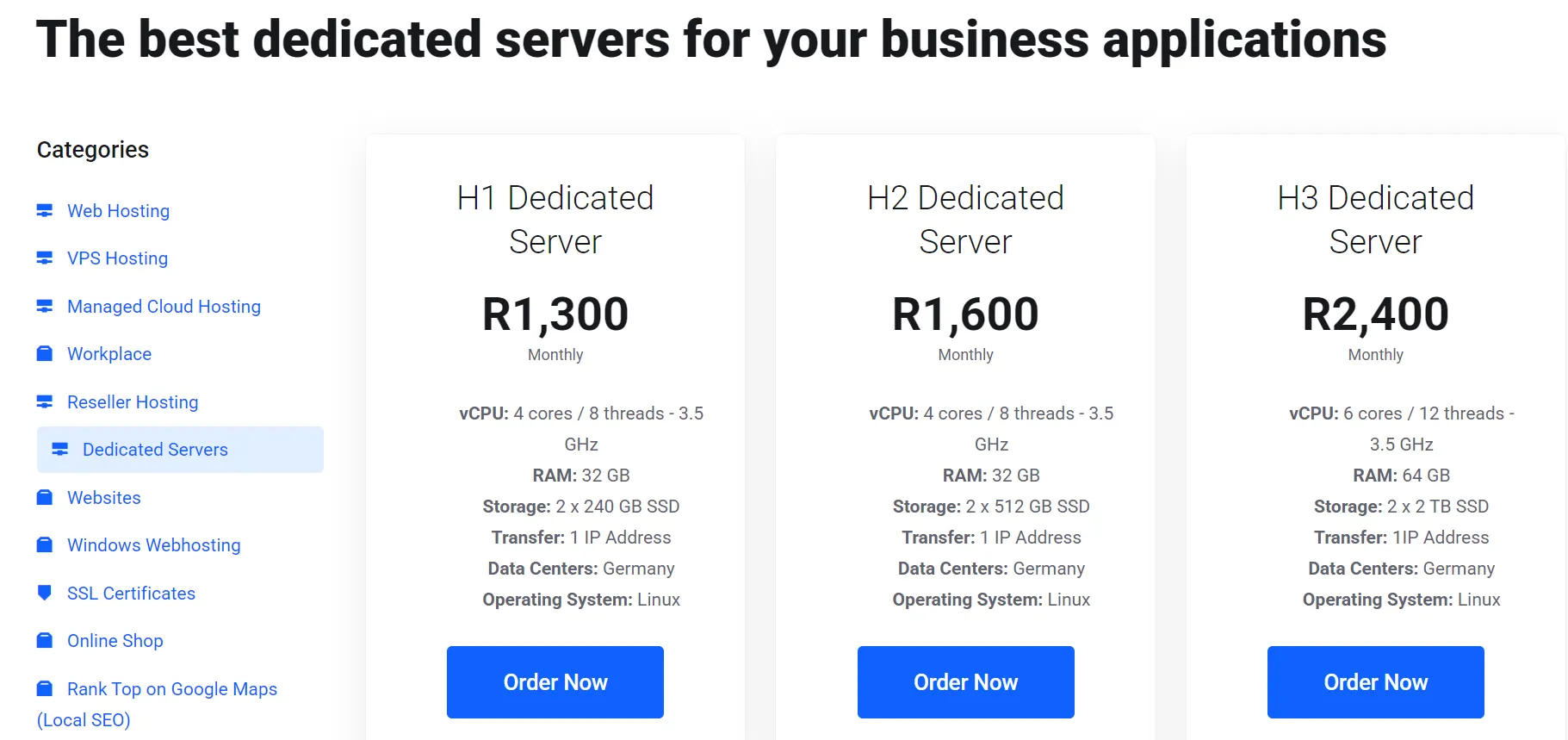
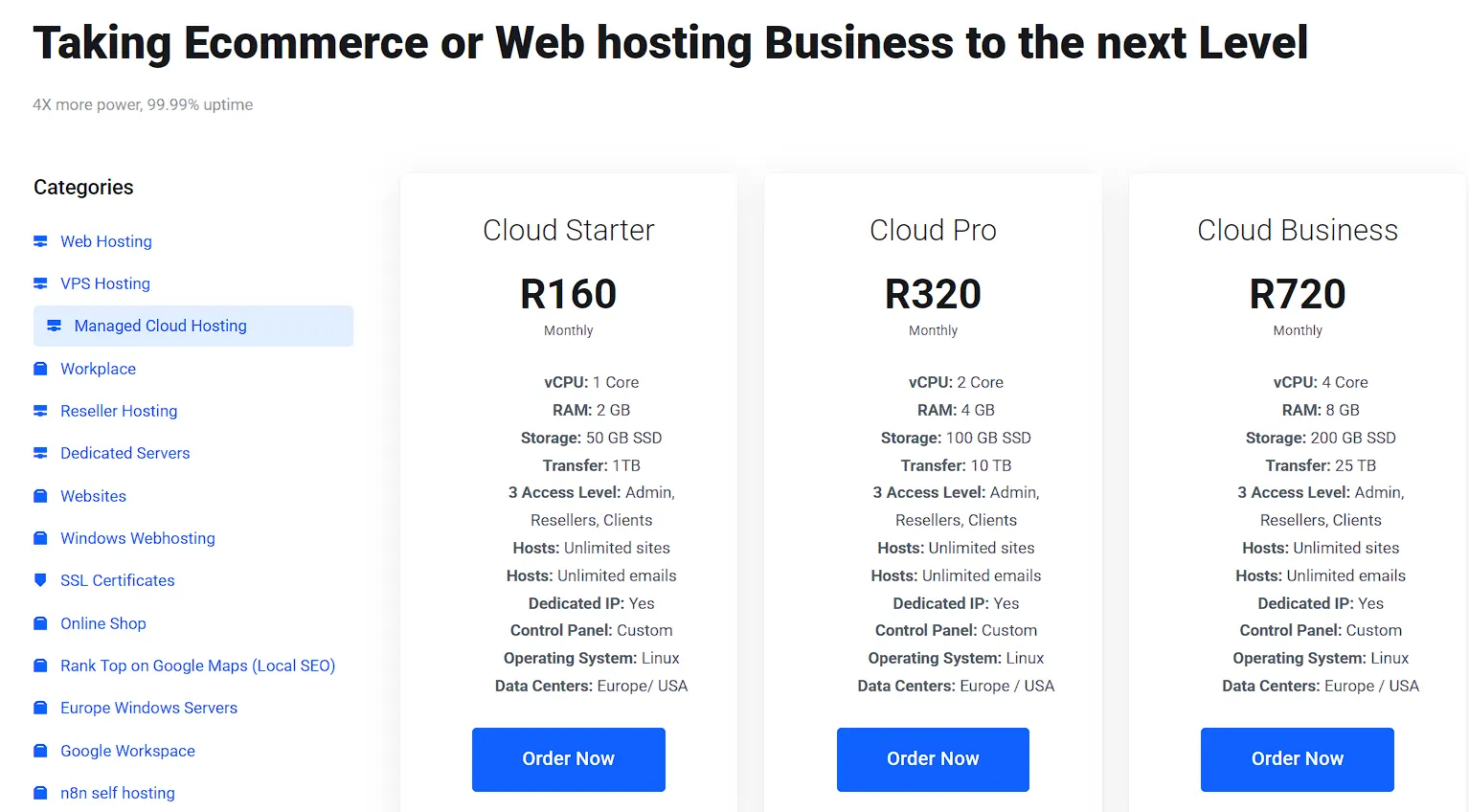
Local pricing tells a different story than most global comparison articles. The table below lines up Truehost’s own cloud VPS tiers against its dedicated server plans, with a competitor plan added for context.
| Plan | Type | Price per month billed triennially | CPU | RAM | Storage |
|---|---|---|---|---|---|
| Cloud VPS Starter | Cloud | R 120.00 | 1 vCPU | 2GB | 50GB SSD |
| Cloud Business | Cloud | R 640.00 | 4 vCPU | 8GB | 200GB SSD |
| H1 Dedicated Server | Dedicated | R 1,040.00 | Intel Xeon, 4 cores | 32GB | 480GB SSD |
| H2 Dedicated Server | Dedicated | R 1,600.00 | Intel Xeon, 4 cores | 32GB | 1TB SSD |
| H3 Dedicated Server | Dedicated | R 1,920.00 | Intel Xeon, 6 cores | 64GB | 4TB SSD |
Line up the Cloud Business tier against the H1 Dedicated Server, and the gap becomes clear.
The dedicated plan costs roughly 45% more each month. But it comes with four times the RAM and more than double the storage.
Watch for hidden costs on both sides. Setup fees, bandwidth overage charges, extra IP addresses, and control panel licensing rarely show up in a headline price.
Managed support, on either option, usually adds a separate monthly cost too.
Pricing changes often in hosting, so treat these figures as a snapshot rather than a fixed number.
Check current Truehost cloud and dedicated plans for up-to-date South African pricing before you commit.
Performance and Speed for South African Visitors
Where your server sits physically affects how quickly your site loads for local visitors.
A server hosted in a South African data center responds quicker to South African traffic than one hosted overseas, regardless of whether it runs on cloud or dedicated infrastructure.
Cloud hosting shares physical resources with other customers during a quiet period, which rarely causes trouble.
During a busy sales period, when many tenants on the same hardware pull resources at once, performance can dip.
A dedicated server avoids that problem entirely. Since you’re the only tenant, your site gets the full CPU and RAM allocation at all times. Traffic on someone else’s site never slows you down.
Picture an online store during a Black Friday sale next to a small business portfolio site with steady, predictable traffic.
The store benefits from cloud hosting’s ability to add resources during the spike.
The portfolio site gets little extra value from that flexibility and might do just as well, or better, on a dedicated server.
Scalability: How Each Option Handles Growth
Cloud hosting adds or removes resources within minutes. If your traffic doubles overnight, a cloud plan can adjust to meet that demand without you touching any hardware.
A dedicated server can’t do that. Adding more RAM or storage means physically upgrading or replacing hardware, which takes time and usually costs more upfront.
This makes cloud hosting a strong fit for seasonal campaigns, product launches, or any business with traffic that swings up and down. A retailer running a once-a-year promotion is a good example.
A dedicated server fits businesses with a steady, predictable load instead. An internal business system used by the same number of staff every day rarely needs to scale on short notice, so the fixed capacity of a dedicated server works fine.
Security, Compliance, and POPIA Considerations
A dedicated server gives you full isolation. Since no other business shares the machine, there’s less exposure if another tenant on shared infrastructure gets compromised. You also control exactly who has access to the server.
Cloud providers run their own strong security practices, including firewalls, monitoring, and regular patching. But sharing infrastructure with other tenants does introduce some shared risk, even with good security controls in place.
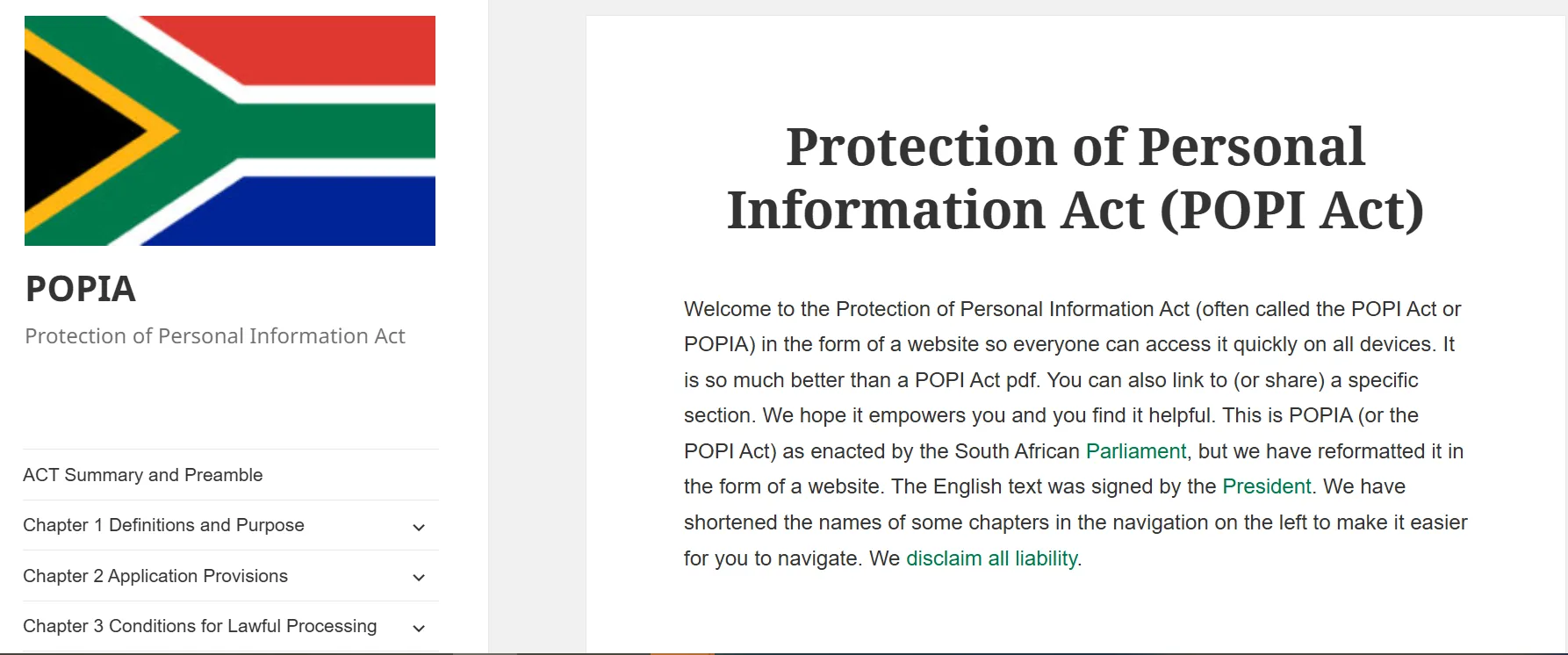
South African businesses also need to think about POPIA. The Protection of Personal Information Act sets rules for how businesses store and process customer data, and where that data physically lives can affect compliance.
Hosting with a local South African provider, on local infrastructure, often makes POPIA compliance more straightforward than relying on an offshore cloud region. Ask any provider, cloud or dedicated, exactly where your data will sit before you sign up.
Management and Technical Skill Requirements
Running a dedicated server usually calls for some technical know-how, either on your own team or through a managed support package from your host. Someone needs to handle patching, security updates, and general server upkeep.
Cloud hosting shifts more of that load onto the provider. Most cloud plans come with provider-managed infrastructure, so you spend less time on hands-on maintenance.
Managed tiers exist on both sides, so the line between “you manage it” and “they manage it” depends on the specific plan you choose.
Truehost’s own cloud and dedicated packages each offer managed options, so check what’s included before assuming you’ll need in-house server skills.
Dedicated servers also carry an ongoing maintenance load that cloud hosting mostly avoids. Hardware ages, parts sometimes fail, and someone has to plan for that over the life of the server.
Which One Fits Your Business?
Start with three questions. How predictable is your traffic? What’s your budget model, fixed or flexible? Does your data carry compliance requirements that favor local, isolated infrastructure?
Cloud hosting usually fits growing sites with traffic that changes from month to month, or businesses that want to avoid managing physical hardware.
Dedicated hosting usually fits data-sensitive operations, high-storage needs, or businesses with steady, predictable loads that don’t need to scale quickly.
Many South African businesses land somewhere in between, and that’s normal. The right call depends on your specific traffic pattern and budget, not a one-size-fits-all rule.
FAQs
Is cloud hosting cheaper than a dedicated server in South Africa?
Not always. An entry-level dedicated server costs more per month than a top-tier cloud VPS plan, but comes with far more RAM and storage attached. Compare specific plans rather than assuming either option wins on price by default.
Which is better for an e-commerce site, cloud or dedicated hosting?
It depends on how your traffic behaves. An online store with seasonal spikes, like a Black Friday sale, usually benefits from cloud hosting’s quick scaling. A smaller store with steady traffic might do just as well on a dedicated server.
Can you move from cloud hosting to a dedicated server later?
Yes. Most hosting providers, including Truehost, support migration between plan types. Many businesses start on cloud hosting while traffic is unpredictable, then move to a dedicated server once their needs settle into a steady pattern.
Do you need technical skills to manage a dedicated server?
Some are needed, unless you choose a managed plan. Managed dedicated hosting shifts, patching, updates, and general upkeep on your provider, so you don’t need an in-house server expert to run one safely.
Is cloud hosting compliant with POPIA for South African businesses?
It can be, but data location matters for compliance. Ask your provider exactly where your cloud infrastructure sits, since hosting customer data offshore can complicate POPIA compliance compared with local South African hosting.
Get Started With Dedicated Hosting Today
Cloud hosting and dedicated servers solve different problems. Cloud hosting gives you quick, flexible scaling and less hands-on maintenance.
A dedicated server gives you steady performance, full control, and often more storage for your Rand.
Pricing alone won’t tell you which one fits your business. Traffic patterns, compliance needs, and how much server management you want to handle all shape the right call.
Compare Truehost’s current cloud and dedicated server plans side by side to see real South African pricing for your specific traffic and storage needs, and talk to the Truehost team if you’re not sure which option fits your setup.