 Web Hosting
 Windows HostingBuilt for Windows apps and websites – stability, speed and flexibility
 Reseller HostingLaunch a hosting business without technical skills or expensive infrastructure
 Affiliate ProgramRefer customers and earn commissions from sales across our platform
 Domain SearchFind and secure a domain name in seconds with our quick lookup tool
 CO ZA Domains
 All DomainsExplore domain names from over 324 TLDs globally – all in one place
 Free Whois Lookup Tool South Africa
 VPS
VPS Website Builder
 Online ShopSet up a sleek eCommerce store with zero coding knowledge
 SSLs
SSLs SupportAccess help articles, how-tos, and everything about our services
 Blog
Blog Contact UsReach our team instantly via live chat or drop us an email
Your domain keeps your website online. The moment it expires, your site goes dark, and your email stops working.
So the question every South African domain owner faces sooner or later is simple: should you trust auto-renewal, or handle it yourself?
Both methods carry risk. Neither one protects you by default. This article breaks down exactly where each method fails, what it costs you if it does, and how to pick the safer option for your situation.
Table of Contents
The Real Risk Behind Both Renewal Methods
Auto-renewal and manual renewal don’t fail for the same reasons.
Auto-renewal fails quietly, through a payment problem you may not notice until it’s too late.
Manual renewal fails loudly but only after you’ve already missed the deadline yourself.
Either failure sends your domain down the same path. It moves from active to suspended to a redemption phase that costs real money to reverse.
If you don’t act during that window, the domain gets deleted and released for anyone to register.
That’s the real stake here. This isn’t about convenience. It’s about what happens the day your payment method or your memory lets you down.
How Domain Auto-Renewal Works in South Africa
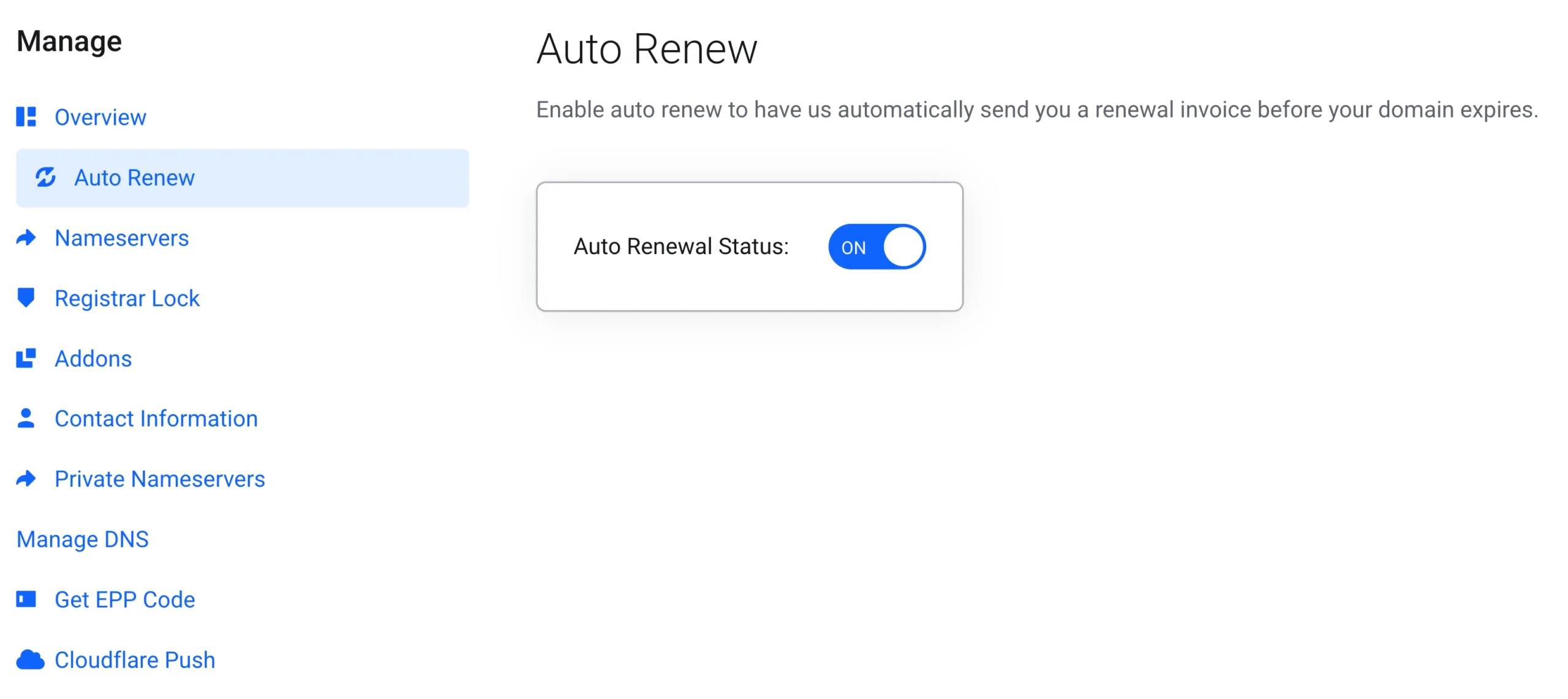
With auto-renewal switched on, your registrar charges a saved card or debit order shortly before your domain expires. No action is required from you, which is exactly the appeal.
Some domain extensions don’t give you a choice at all. Certain TLDs are set up as auto-renewal only, so manual renewal isn’t available for them.
If your domain falls into that category, auto-renewal isn’t a preference. It’s a requirement.
The catch is what happens when the charge doesn’t go through. Auto-renewal only works if the payment behind it actually succeeds.
When Auto-Renewal Fails Without Warning
A few common triggers can quietly break auto-renewal in South Africa:
- An expired or replaced debit or credit card that the registrar can no longer charge
- A bank decline or fraud hold on the transaction, especially on international registrar billing
- A lapsed EFT or PayFast mandate that never gets renewed on the payment side
Most owners never check their renewal confirmation email closely. So a failed charge can sit unnoticed for days, right up until the website goes offline.
How Manual Renewal Works in South Africa
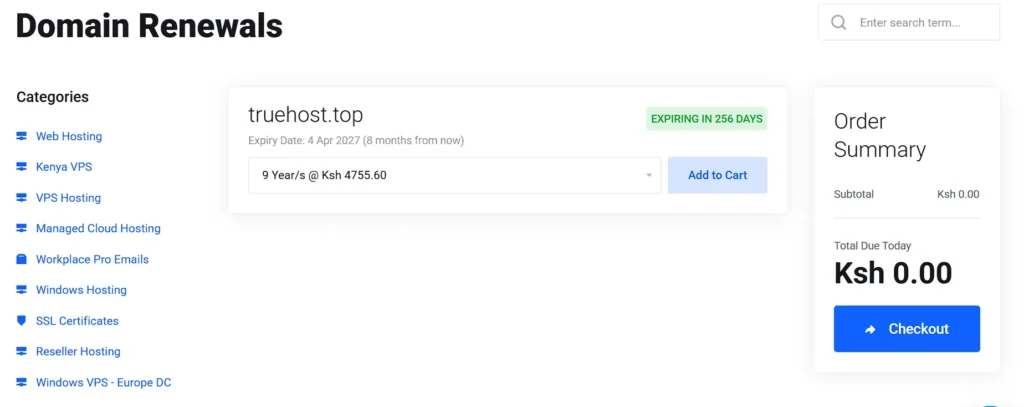
Manual renewal puts the decision in your hands. Your registrar sends a reminder, usually around 30, 14, and 7 days before expiry, and you log in to pay.
That extra step has a real upside. It lets you compare renewal quotes, wait for a Black Friday or seasonal promotion, or negotiate pricing if a renewal fee looks high.
Auto-renewal locks you into whatever rate is charged on the day. But that same freedom is also the weak point. Nobody is watching your back if you forget.
When Manual Renewal Fails
Manual renewal tends to fail for very human reasons:
- A reminder email lands in spam or gets buried in a full inbox
- Contact details on the domain record are outdated, so notices never arrive
- Life gets busy, and the renewal date slips your mind
Unlike a failed card charge, a missed manual renewal has no built-in fallback. Nothing steps in to save you.
What Happens If You Miss a Renewal in South Africa
South African domains follow a set lifecycle once they expire, and it’s worth knowing every stage.
First, the domain expires and goes into pending suspension. The website and email tied to it stop working almost immediately.
Next comes pending deletion, a short window before the domain moves further down the line.
After that, the domain enters closed redemption. You can still get it back here, but only by paying a redemption fee on top of the normal renewal cost.
For .za domains, that fee sits at R398. For .joburg, .capetown, and .durban domains, it climbs to R685.
Closed redemption typically lasts between 30 and 75 days, depending on the registry. Once that window closes, the domain is deleted and released. From that point, anyone can register it, and you have no way to reclaim it.
Which Method Is Actually Safer? A Decision Framework
For most South African domain owners, auto-renewal is the safer default.
A failed payment usually leaves you inside the grace period, with time to fix the card and renew without penalty.
A missed manual renewal often gives you no such cushion, since nobody flags the gap until the site is already down.
That said, manual renewal still makes sense in a few situations:
- You manage only one or two domains and check your email daily
- You want full control over renewal timing and pricing
- You’re comfortable tracking expiry dates yourself without relying on reminders
Auto-renewal is the stronger choice when the domain runs an active business, an online store, or a professional email address.
A few days of downtime there costs far more than a redemption fee ever would.
How to Protect Your Domain No Matter Which Method You Choose
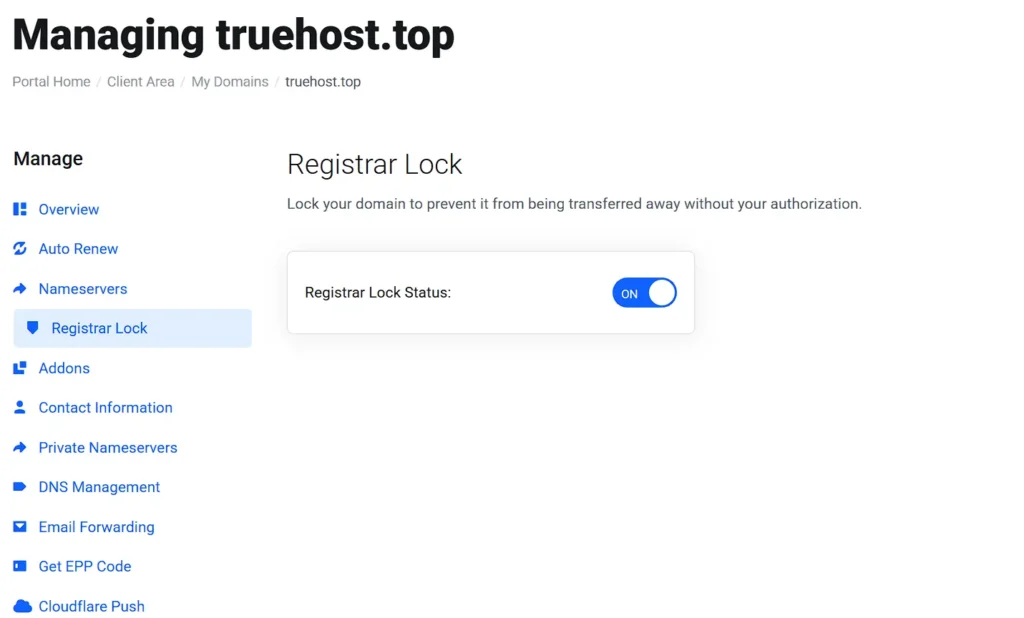
Whichever route you pick, a few habits lower your risk either way.
1) Turn on domain locking if your registrar supports it. This blocks unauthorized transfers or changes, and it’s now available for .co.za domains directly.
2) Keep your registrant contact details current. Renewal notices and auto-renewal failure alerts both depend on your registrar being able to reach you.
3) Set a calendar reminder 30 to 60 days before expiry, even with auto-renewal switched on. That reminder becomes your backstop if a payment quietly fails behind the scenes.
Frequently Asked Questions
Can someone else register my domain if it expires?
Yes, but only after the redemption window closes. Once the domain is deleted and released, it becomes available to anyone on a first-come, first-served basis.
What happens if my .co.za domain expires and I don’t renew it?
Your site and email stop working almost right away. The domain moves through suspension and pending deletion, then into closed redemption, where you can still reclaim it for a fee.
Is it safe to save my card details for domain auto-renewal?
It’s generally safe with a reputable registrar, since most use standard payment security. The bigger risk is an expired card causing renewal to fail without you noticing.
How long is the grace period before a .co.za domain is deleted?
Closed redemption for .za domains usually lasts between 30 and 75 days, depending on the registry. After that window, the domain is deleted and released for anyone to register.
What is a domain redemption fee, and how much does it cost in South Africa?
It’s a penalty charged on top of your normal renewal fee to recover a domain from closed redemption. For .za domains, it’s R398, and R685 for .joburg, .capetown, and .durban domains.
Renew Your Domain Today
Auto-renewal and manual renewal both carry risk. But the risk size depends on what your domain does for you.
A parked domain can absorb a missed renewal. A business website or email address cannot.
If your website matters, treat renewal as part of your uptime, not an afterthought. Auto-renewal, backed by an updated card and a calendar reminder, closes that gap. That gap catches most South African domain owners off guard.
Truehost manages auto-renewal, domain locking, and expiry reminders for your .co.za domain in one dashboard. Nothing slips through, even during a busy month.
Register or transfer your domain with Truehost and keep your site online without watching the calendar yourself.