 Web Hosting
 Windows HostingBuilt for Windows apps and websites – stability, speed and flexibility
 Reseller HostingLaunch a hosting business without technical skills or expensive infrastructure
 Affiliate ProgramRefer customers and earn commissions from sales across our platform
 Domain SearchFind and secure a domain name in seconds with our quick lookup tool
 CO ZA Domains
 All DomainsExplore domain names from over 324 TLDs globally – all in one place
 Free Whois Lookup Tool South Africa
 VPS
VPS Website Builder
 Online ShopSet up a sleek eCommerce store with zero coding knowledge
 SSLs
SSLs SupportAccess help articles, how-tos, and everything about our services
 Blog
Blog Contact UsReach our team instantly via live chat or drop us an email
Choosing between Shopify and WooCommerce is one of the biggest decisions in starting an online store in South Africa. Both platforms support building, managing, and growing a successful eCommerce business, but they take fundamentally different approaches to hosting, payments, compliance, and cost.
Shopify is built for simplicity and speed. It bundles hosting, security, and updates into one subscription, which makes it a strong fit for beginners and business owners who want to launch without handling technical infrastructure.
WooCommerce is built for control. As a free WordPress plugin, it offers close to unlimited customization and full data ownership, which makes it the stronger choice for merchants who lean on content marketing, need custom functionality, or want their store’s data to live entirely under their own roof.
For South African merchants specifically, the decision carries extra weight: currency exposure on Shopify’s USD billing, VAT treatment, POPIA data residency, and which local payment gateways are supported natively all shift the calculation in ways that generic Shopify-vs-WooCommerce comparisons don’t cover.
| Feature | Shopify | WooCommerce |
| Pricing | Basic $19–25/mo, Grow $49–65/mo, Advanced $299–399/mo, Plus from $2,300/mo (billed in USD, forex-exposed) | Plugin is free; SA hosting starts at R 35.00 (Truehost) |
| Native payments | Shopify Payments is not available in South Africa | No native gateway; connects directly to local gateways |
| Local gateways | PayFast, Yoco, Peach Payments, PayGate; as third-party integrations only | PayFast, Yoco, PayGate, Ozow (Instant EFT), Paystack; via native plugins |
| Transaction fees | Gateway fee plus a Shopify surcharge (2% / 1% / 0.6% / 0.2% depending on plan) | Gateway fee only; no platform surcharge |
| VAT/forex | 15% VAT applies to the USD subscription (Shopify is a registered foreign e-service supplier in SA); bank forex margins of 2–3.5% also apply | Hosting and gateways are typically ZAR-billed with VAT-inclusive invoices |
| Hosting location | Outside South Africa, bundled, no choice | Merchant’s choice; SA-based hosting recommended for POPIA and latency |
| POPIA responsibility | Shared, but data is processed offshore by default | Falls fully on the merchant/host, allowing more direct control |
| Data portability | Export limited to Shopify’s own tools | Full database ownership with unrestricted export |
Table of Contents
1) Getting Started on Shopify vs. WooCommerce
Shopify
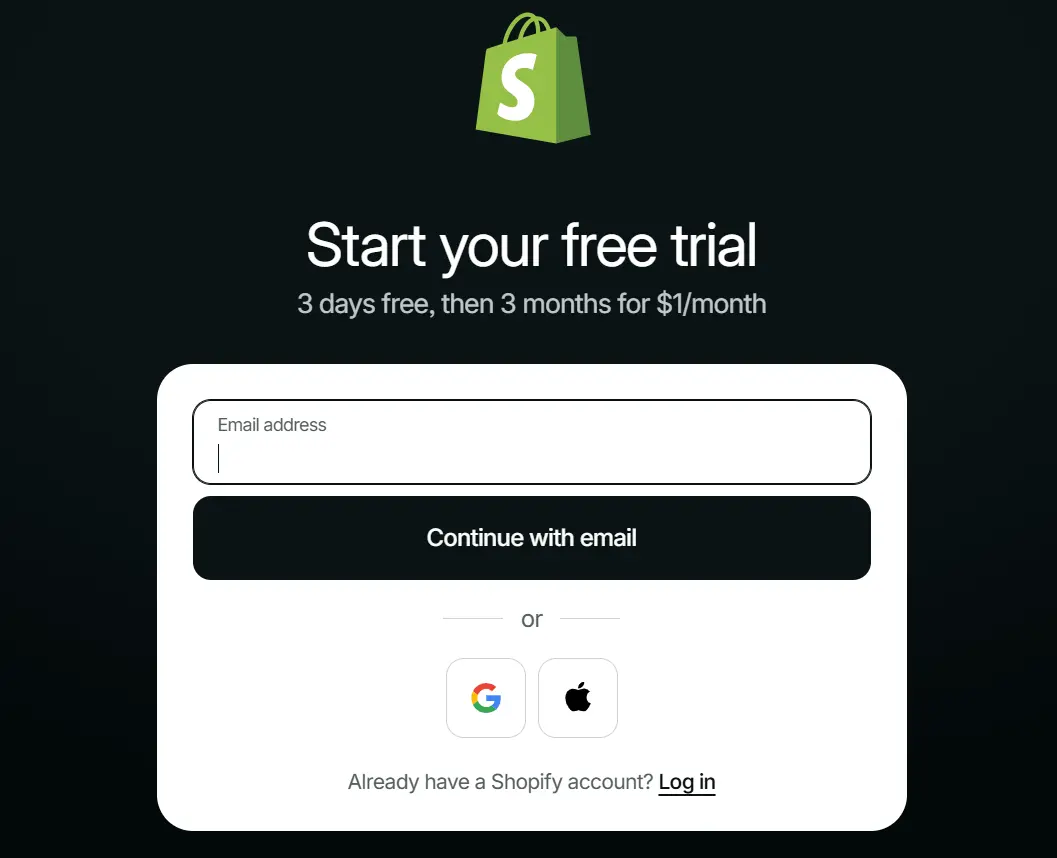
Sign-up follows a simple sequence: start a 3-day free trial, pick a plan and theme, and launch. Billing is always in USD, so currency risk enters the equation from day one.
Hosting, SSL, and checkout come bundled, but Shopify Payments is not available in South Africa. That means a third-party gateway- PayFast, Yoco, Peach Payments, or PayGate- has to be connected before a single sale can go through. Gateway approval adds 1–3 business days for KYC/FICA checks on top of normal setup time.
First-week checklist for an SA store:
- Set the store currency to ZAR
- Connect a local payment gateway
- Add a POPIA-compliant privacy policy and cookie notice (Shopify does not generate these)
- Load a VAT number if registered, since Shopify charges 15% VAT on South African subscriptions
Realistic launch time: a few hours to a few days, plus gateway approval.
WooCommerce
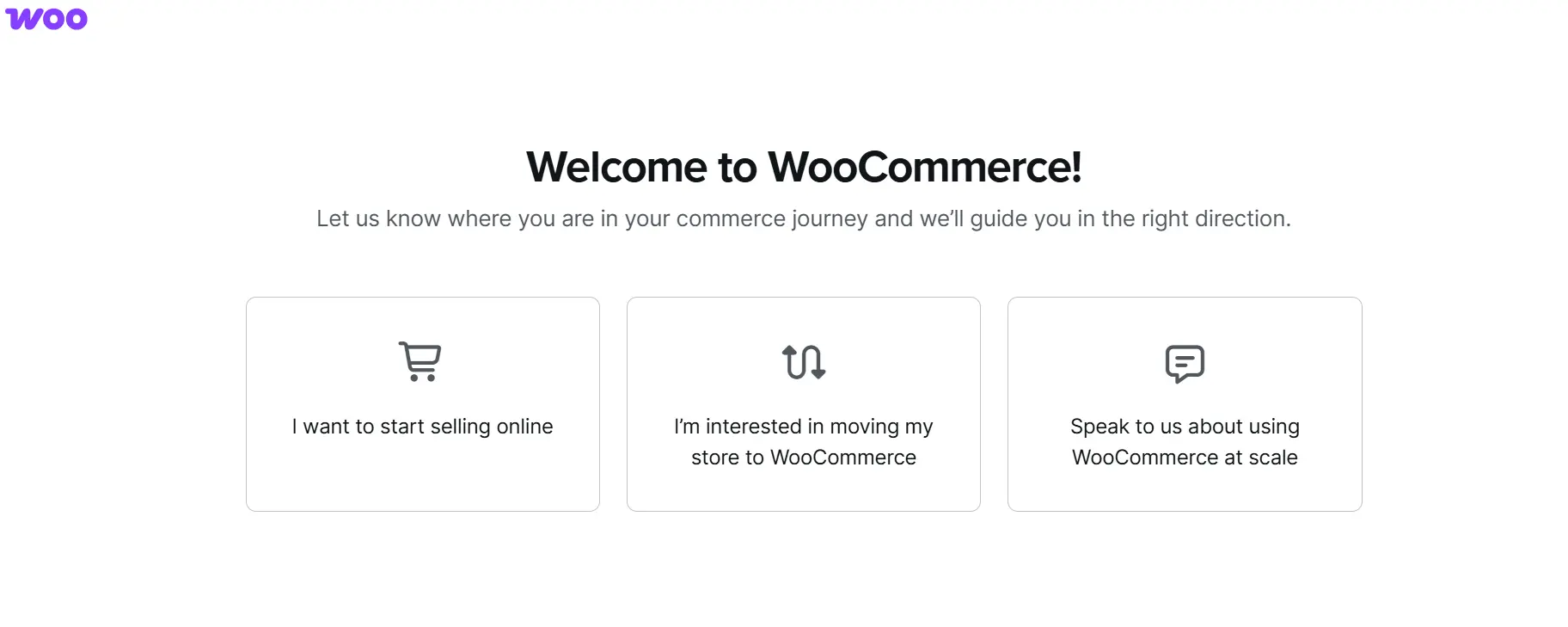
WooCommerce requires a live WordPress site first. For a South African store, Truehost is preferable to a generic international host for speed and POPIA data residency.
The setup sequence: pick a host, install WordPress and WooCommerce (free), select a theme, configure a local gateway (PayFast, Yoco, PayGate, or Ozow for Instant EFT), set up shipping and VAT, add a POPIA compliance plugin (such as Complianz), and launch.
Realistic launch time: days to a few weeks, depending on comfort with WordPress or whether a local freelancer or agency is brought in.
2) Hosting Requirements
Shopify is fully managed; CDN, scaling, security, and updates are all handled by Shopify, delivering high uptime with no server management required.
WooCommerce requires choosing an SA or international host optimized for WordPress. Performance depends entirely on that setup, and the merchant is responsible for updates, backups, and security. Managed WooCommerce hosting typically runs R300–R700+/month.
Scalability: both platforms handle growth, but Shopify auto-scales with less effort. WooCommerce needs hosting upgrades or performance optimization to handle traffic spikes such as Black Friday.
3) Range of Themes & Templates
Shopify

The official Theme Store lists 1,100+ free and paid themes across dozens of industry categories. A core set of free, Shopify-built themes- Dawn, Craft, Refresh, Crave, and others- is optimized for speed and Online Store 2.0 compatibility.
Premium themes range from about $100 to $350+, with deeper customization and industry-specific features. All themes run on Shopify’s Liquid templating system with a drag-and-drop editor, requiring no coding for standard customization.
WooCommerce
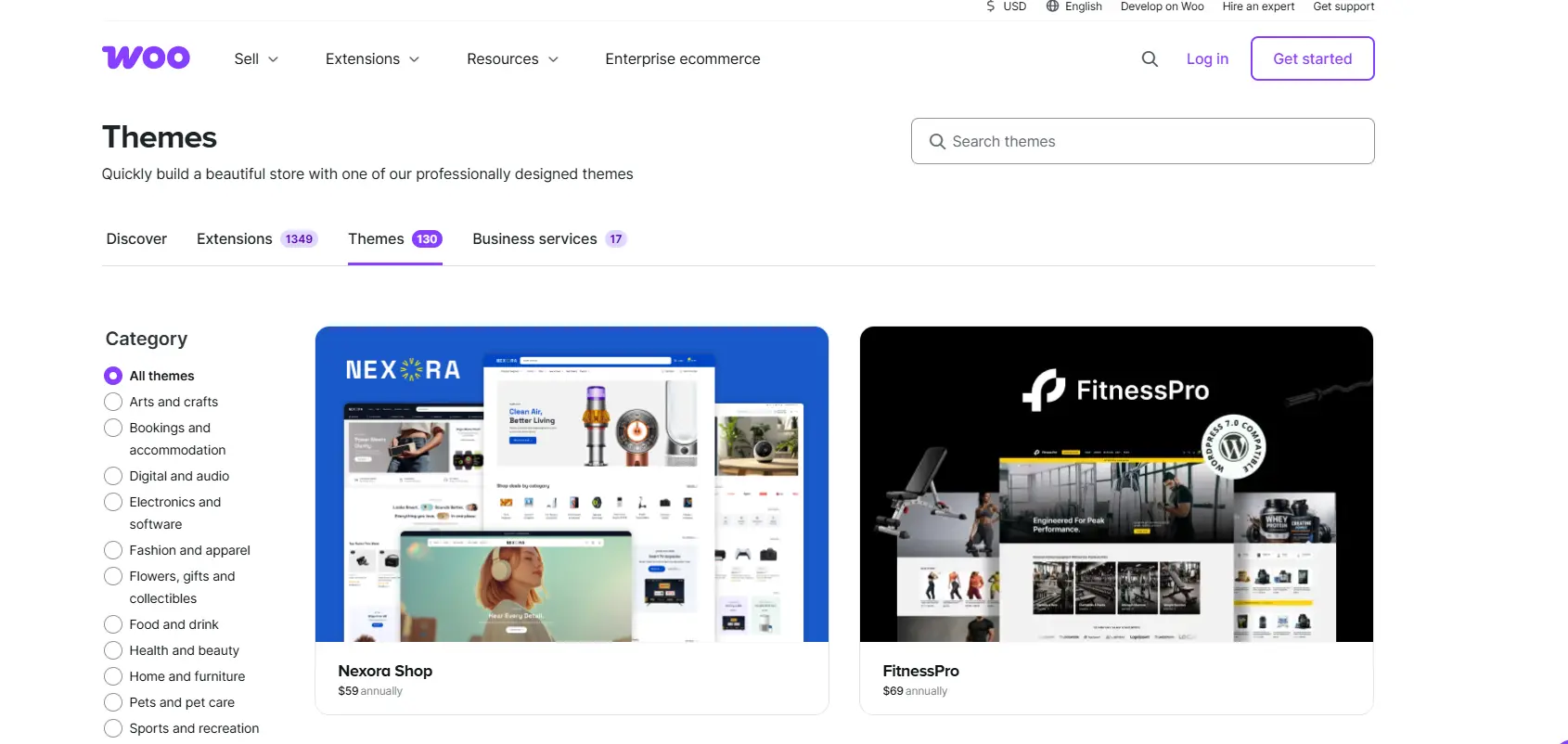
WooCommerce works with virtually any WordPress theme, and the WordPress.org directories alone list over 14,000 free themes. Dedicated WooCommerce-optimized themes- Astra, Storefront, Kadence, Blocksy, Woodmart, Flatsome- are widely used. Premium WooCommerce themes run around $59/year for a single-site license, with page-builder-integrated options like Divi and Elementor-based themes in a similar range.
4) Pricing & Total Cost of Ownership
Shopify
Shopify runs a tiered monthly or yearly USD subscription:
| Plan | Pay Monthly | Pay Yearly |
| Basic | $27/mo | $19/mo |
| Grow | $72/mo | $54/mo |
| Advanced | $399/mo | $299/mo |
| Plus | from $2,300/mo | (individually quoted, no fixed yearly discount) |
Every plan includes hosting, a custom domain connection, and SSL at no extra infrastructure cost. For South African merchants, billing stays in USD only; the rand amount paid shifts with the exchange rate, and 15% VAT is added on top. Paying yearly saves roughly 25–30% versus monthly billing on the Basic, Grow, and Advanced plans.
WooCommerce
The core plugin costs $0. The realistic all-in cost, however, is modular and adds up fast: a production-ready store runs $1,800–$15,000+ per year depending on hosting, plugins, themes, and payment processing, with enterprise custom builds exceeding $50,000 in the first year.
5) SEO Capabilities
Shopify
Built-in SEO features include XML sitemaps and editable meta titles and descriptions. Mobile-friendly themes load quickly, and SEO settings are clean and easy to manage. A built-in blogging feature exists but is more basic than WordPress’s, and URL structure customization is more limited.
WooCommerce
Built on WordPress, WooCommerce is strong for SEO and content marketing, with full control over URLs, categories, and site structure. It’s compatible with powerful SEO plugins like Yoast SEO and Rank Math, making it better suited to businesses that rely heavily on blogs, guides, and organic search traffic.
6) Customer Support & Ecosystem
Shopify offers 24/7 chat, email, and phone support, tiered by plan, backed by a large app store.
WooCommerce support is decentralized; hosting providers, the WordPress community, plugin developers, and agencies each play a role. South Africa has a strong local WooCommerce developer ecosystem to draw on.
App/plugin cost creep: Shopify’s app ecosystem leans subscription-based, while WooCommerce has more free and one-off pricing options, though quality varies more widely.
7) Scalability, Migration & Data Ownership
Scalability
Shopify manages hosting, security, and traffic spikes automatically, making it easier to grow without a technical team. WooCommerce can scale just as effectively, but it depends on hosting choice and site optimization; growth often requires moving to VPS or managed hosting, with performance, updates, and server management remaining the merchant’s responsibility.
Migration
Moving between the two platforms is possible, but custom themes and features usually need to be rebuilt.
Shopify → WooCommerce: products import easily; orders, customers, images, and redirects generally require migration tools like LitExtension or Cart2Cart.
WooCommerce → Shopify: Shopify’s Store Importer handles basic products; a new Shopify theme and replacements for WooCommerce plugins are still needed.
Data Ownership
WooCommerce gives full ownership of the website and database, full access to data and backups, and an easier path to migrating elsewhere later. Shopify allows products, customers, and orders to be exported, but themes, apps, and custom features remain tied to Shopify’s platform, with no direct access to the underlying database.
South African note: for stores that need to handle POPIA-related data subject requests directly, owning the database in WooCommerce simplifies that process considerably.
Choose Shopify If
- Routing payments through PayFast, Yoco, or PayGate and absorbing Shopify’s added surcharge is acceptable
- A monthly cost that floats with the rand/dollar exchange rate is preferable to managing local hosting
- Official 24/7 support counts more than SA-specific compliance guidance bundled into the platform
- Customer data being processed on infrastructure outside South Africa is not a concern
Choose WooCommerce If
- ZAR-billed hosting, VAT-inclusive local invoices, and full control over where customer data physically sits are priorities
- POPIA data ownership and portability count enough to justify managing a hosting relationship directly
- Using PayFast, Yoco, PayGate, or Ozow directly; without an added platform surcharge; is preferred
- Budget is tightest pre-revenue, and setup complexity can be absorbed personally or through a local agency
Which One Should You Choose?
The right answer comes down to trade-offs, not a universal winner. Speed and hands-off infrastructure point toward Shopify. Lower long-term fees, ZAR billing, and full data control under POPIA point toward WooCommerce.
For a South African business, that second trade-off usually tips the scales. Local, ZAR-billed hosting removes the forex and VAT exposure that comes with Shopify’s USD subscription, keeps customer data on infrastructure that satisfies POPIA data residency expectations, and avoids Shopify’s extra transaction surcharge entirely.
Ready to launch a WooCommerce store on hosting built for South African businesses? Get started with Truehost’s e-commerce hosting, local WordPress and WooCommerce hosting with ZAR billing, VAT-inclusive invoices, and support built around POPIA compliance from day one.
Shopify vs WooCommerce: FAQs
Is WooCommerce really free?
WooCommerce’s core plugin costs $0 to download and install on a WordPress site. A production-ready WooCommerce store still requires paid hosting, and often paid themes, plugins, and payment processing tools, bringing realistic annual costs to somewhere between $1,800 and $15,000+, with enterprise builds exceeding $50,000 in year one.
Which is cheaper long-term at scale?
WooCommerce’s total cost scales with hosting, plugin, and developer choices rather than a fixed subscription tier, which can make WooCommerce cheaper at scale for merchants who manage infrastructure efficiently. Shopify’s cost scales predictably by plan tier but includes a built-in transaction surcharge on top of gateway fees in South Africa, since Shopify Payments is unavailable locally, which raises effective per-sale cost compared to WooCommerce’s gateway-fee-only structure.
Which has better uptime/performance out of the box?
Shopify provides fully managed hosting, CDN, and auto-scaling by default, delivering strong uptime without any server configuration. WooCommerce’s uptime and performance depend entirely on the chosen hosting provider and site optimization, meaning results can match or fall short of Shopify’s depending on setup quality.
Can a store switch from one platform to the other later?
Migration between Shopify and WooCommerce is possible in both directions. Products typically transfer with standard import tools, while orders, customers, images, redirects, and custom theme features generally require third-party migration tools or manual rebuilding.
Which is easier for a complete beginner?
Shopify offers a faster, more guided setup path for a beginner, since hosting, security, and checkout come bundled, and a store can launch within hours to a few days plus gateway approval time. WooCommerce requires setting up WordPress, hosting, and a payment gateway separately, which extends realistic launch time to days or weeks for a beginner without prior WordPress experience.
What is the biggest problem with Shopify for South African merchants?
Shopify Payments, the platform’s native low-fee payment processor, is not available in South Africa, forcing merchants onto third-party gateways that carry an additional Shopify transaction surcharge on top of the gateway’s own fee. Combined with USD-only billing, 15% VAT on the subscription, and 2–3.5% bank forex margins, this currency and fee exposure represents the biggest structural drawback of Shopify for a South African business compared to WooCommerce’s ZAR-billed, surcharge-free alternative.