 Web Hosting
 Windows HostingBuilt for Windows apps and websites – stability, speed and flexibility
 Reseller HostingLaunch a hosting business without technical skills or expensive infrastructure
 Affiliate ProgramRefer customers and earn commissions from sales across our platform
 Domain SearchFind and secure a domain name in seconds with our quick lookup tool
 CO ZA Domains
 All DomainsExplore domain names from over 324 TLDs globally – all in one place
 Free Whois Lookup Tool South Africa
 VPS
VPS Website Builder
 Online ShopSet up a sleek eCommerce store with zero coding knowledge
 SSLs
SSLs SupportAccess help articles, how-tos, and everything about our services
 Blog
Blog Contact UsReach our team instantly via live chat or drop us an email
Unmanaged VPS hosting splits server duties into two parts. The provider handles the hardware, the network, and the virtualization layer.
You handle everything from the operating system upward.
That split sits in the middle of the hosting spectrum. Shared hosting sits on one end, with almost everything handled for you.
A fully managed VPS or a dedicated server sits on the other end, with support included at every layer.
Unmanaged does not mean the physical server gets ignored. The provider still keeps the machine running, the network online, and the data center secure. Your job starts once the server reaches your hands.
Most VPS plans on the market default to unmanaged. Managed support gets added as an extra, not the other way around.
Reading the fine print on a plan tells you which one you are actually buying.
This guide breaks down what unmanaged VPS hosting asks of you. It covers the skills you need, the risks you take on, and what you will pay in South Africa.
By the end, you will know if you are ready for it, or if managed hosting suits you better.
Table of Contents
Managed vs Unmanaged VPS: The Real Difference
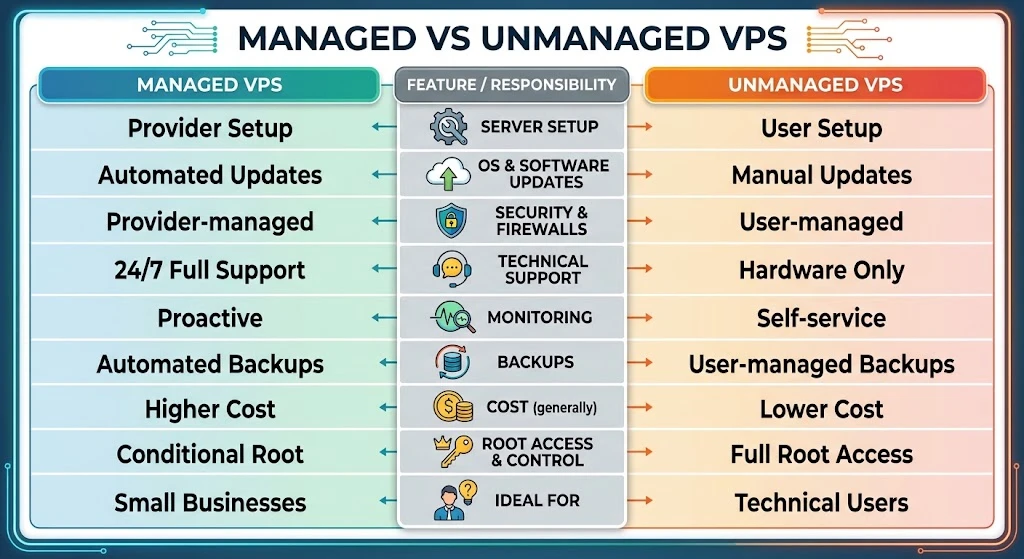
The gap between managed and unmanaged VPS comes down to who does the work.
A managed plan hands off updates, patching, backups, and monitoring to the provider. Meanwhile, an unmanaged plan leaves all of that with you.
Hosts handle infrastructure performance, security, and monitoring on their end.
You handle applications and security on your own server. That split defines nearly all the differences between the two plan types.
Support scope also shifts between the two tiers. On a managed plan, the support team helps with server-level issues, not just the network.
On an unmanaged plan, support usually stops at the infrastructure layer, leaving application problems to you.
The price difference reflects that labor split. A managed plan costs more because the provider handles the ongoing work. An unmanaged plan costs less because you carry it yourself.
Some South African providers offer a middle option. You get root access along with select managed add-ons, such as backups or monitoring.
That hybrid setup suits readers who want some control but not all the responsibility.
What Root Access Really Gives You
Root access means full administrative control over your server. Nothing sits behind a locked door once you have it.
From there, you can install any software you need. You can edit system files, open or close network ports, and adjust kernel settings directly.
That level of control comes without guardrails. A single wrong command can take the whole server offline. There is no safety net catching mistakes before they cause damage.
Root access on its own is not the risk. Careless use of it, without backups or a plan, creates the real danger.
The Benefits of Unmanaged VPS Hosting
Unmanaged VPS hosting offers real advantages once you have the skills to use it. Four benefits warrant closer scrutiny for South African site owners weighing this option.
1) Lower Monthly Cost
Unmanaged plans cost less, since you are not paying for a management team. That gap adds up across a year, especially for agencies running several servers at once.
So every rand you save on management fees can go toward more RAM or storage instead.
2) Full Control Over Your Server
Root access lets you install any software your project needs. You can also run custom firewalls, specific database versions, or tools that a managed plan might restrict.
That freedom suits developers who need an exact setup rather than a generic one.
3) Faster Changes, No Waiting on Support Tickets
Managed plans often route changes through a support queue. On an unmanaged server, you make the change yourself instead and move on.
This suits agencies juggling client deadlines that cannot afford to wait for a ticket response.
Server Skills You Can Reuse
Running your own server builds real Linux and security knowledge as you go.
Those skills carry into your next project or client contract. Fewer South African hosting professionals hold this experience. So it can set you apart.
Resources Tuned to Your Workload
You decide how much CPU, RAM, and storage each task gets. A managed setup often locks those choices behind a standard template.
Meanwhile, unmanaged hosting lets you fine-tune performance for the specific app you are running.
Who Should Choose Unmanaged VPS Hosting in South Africa
Unmanaged VPS hosting fits certain readers well. Developers, agencies with an in-house sysadmin, and SaaS builders often already have the skills they need.
Businesses running their own Linux systems also tend to do fine here.
It fits other readers poorly. First-time site owners rarely have the time or background for it.
Solo business owners without technical staff often find the maintenance load heavier than expected.
A short self-check can help you decide:
- Ask how comfortable you are with Linux commands.
- Ask how many hours a week you can spend on server upkeep.
- Ask if you already keep tested backups of your work.
- Ask how much you know about basic server security.
A low score across those questions points toward managed hosting instead.
Some South African providers let you start unmanaged and switch to managed later. That option lowers the stakes of an early decision.
What You Are Responsible for on an Unmanaged VPS
Operating system updates and security patches are you responsibility. You set the schedule, and you keep it, since no one else will.
Firewall setup and SSH hardening also sit on your plate. Disabling password login in favor of key-based access reduces common attacks.
Backups need to be scheduled, but scheduling alone is not enough. Testing that a backup actually restores counts just as much as making it.
You also install and configure your own stack. That covers the web server, the database, and any control panel you want to use.
Ongoing monitoring rounds out the list. Monitoring uptime, disk space, and resource usage early on prevents small problems from turning into outages.
Unmanaged VPS Pricing in South Africa
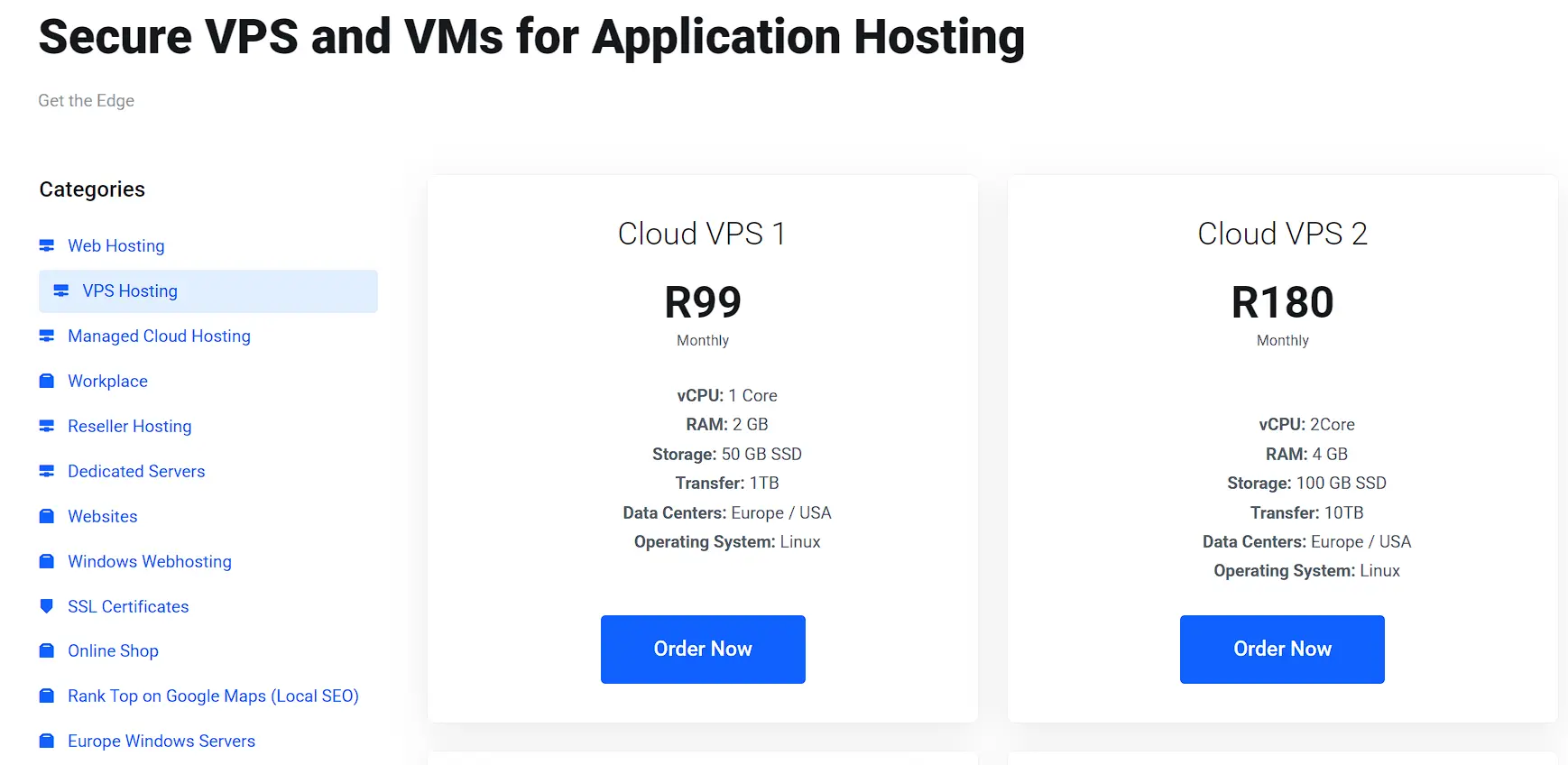
Truehost South African unmanaged plans start at R 90.00
to R 500.00 per month. That price usually covers a small setup, such as one or two vCPUs with a few gigabytes of RAM.
That sticker price only tells part of the story. Your own time, or the cost of a freelance sysadmin during an emergency, adds to the real total.
Currency also plays a role in the local market. Global providers often bill in US dollars, so a weaker rand can push your hosting bill higher.
South African providers that bill in rand keep your monthly cost steady.
Data residency plays a role in compliance, too. Hosting with a South African provider can support POPIA compliance, since your data stays inside the country.
The Real Risks of Unmanaged VPS Hosting
Misconfiguration sits at the top of the risk list. Without a provider catching mistakes, a small setup error can cause downtime with no warning.
Delayed patching adds another layer of risk. Known vulnerabilities remain open longer whenever updates slip past their scheduled release.
Compliance exposure follows close behind. A breach on an unsecured server can trigger POPIA issues alongside the technical cleanup.
A few habits lower these risks:
- Automated patch tools catch updates you might otherwise miss.
- A tested backup routine gives you a way back after a failure.
- A basic security checklist helps close common gaps.
FAQs
What skills do you need for unmanaged VPS hosting?
You need working knowledge of Linux commands and basic server administration. Comfort with the command line, file permissions, and package managers helps the most. Security basics, such as firewall rules and SSH keys, round out the list.
Can a beginner use unmanaged VPS hosting?
A beginner can use it, but the learning curve is steep. Mistakes on a live server carry real consequences for uptime and security. Most beginners find managed hosting a safer starting point while their skills grow.
What happens if something goes wrong on an unmanaged VPS?
Support usually helps with hardware or network issues only. Application-level problems, such as a broken site or a locked account, are you responsibility. Some providers offer paid emergency support for unmanaged customers who need extra help.
When should you upgrade from unmanaged to managed VPS?
Upgrade once maintenance starts eating up the time you need for other work. Growing traffic, added compliance needs, or a lack of in-house skills are common signals. Many South African providers allow you to switch plans without changing servers.
Picking the Right VPS for Where You Are Today
Your choice comes down to the self-check from earlier in this guide. Unmanaged hosting rewards technical comfort and time, while managed hosting trades cost for support.
Neither option is the wrong answer on its own. The right plan matches your current skills, not the skills you hope to build later.
Compare Truehost’s managed and unmanaged VPS plans side by side before you commit.
Start unmanaged if your checklist scores well, or start managed if it does not. Either way, you can switch plans later without moving to a new provider.