 Web Hosting
 Windows HostingBuilt for Windows apps and websites – stability, speed and flexibility
 Reseller HostingLaunch a hosting business without technical skills or expensive infrastructure
 Affiliate ProgramRefer customers and earn commissions from sales across our platform
 Domain SearchFind and secure a domain name in seconds with our quick lookup tool
 CO ZA Domains
 All DomainsExplore domain names from over 324 TLDs globally – all in one place
 Free Whois Lookup Tool South Africa
 VPS
VPS Website Builder
 Online ShopSet up a sleek eCommerce store with zero coding knowledge
 SSLs
SSLs SupportAccess help articles, how-tos, and everything about our services
 Blog
Blog Contact UsReach our team instantly via live chat or drop us an email
Running a physical shop in South Africa is hard work. You deal with foot traffic that dries up in winter, rent that climbs every year, and customers who only find you if they happen to walk past your door.
If you want to start an online shop South Africa, you don’t need to close your physical doors. You just need to give your business a second entrance, one that stays open at midnight and reaches customers in Cape Town while you sleep in Durban.
This guide walks you through exactly how to make that shift, without the developer fees or the technical headaches that usually scare small business owners away.
Table of Contents
Why Now Is the Right Time to Start an Online Shop in South Africa
Physical retail alone limits you to a nine-to-five window and a single neighbourhood. Every customer who can’t make it to your shop before closing time is a sale you lose.
South African shoppers have moved online faster than most retailers expected. Instant EFT, mobile wallets, and next-day courier delivery have made buying from a small business online as easy as buying from a big-box chain. Retailers who start an online shop in South Africa today are simply meeting their customers where they already are.
Step 1: Map Your Physical Store to a Digital Layout
Before you touch a website builder, it helps to picture how your shop translates into digital form. Every part of your physical store has a direct online equivalent, and seeing the two side by side makes the whole process less intimidating.
| Physical Store Element | Digital Equivalent | What It Does |
|---|---|---|
| Storefront window | Website homepage and theme | First impression, mobile-friendly design |
| Shelves and aisles | Product categories and filters | Helps shoppers find items quickly |
| Product labels | Product variants and attributes | Lists sizes, colours, and stock options |
| Stockroom | Digital inventory management | Warns you when stock runs low |
Once you see your business laid out this way, the idea of building an online shop feels a lot less like starting from scratch. You are simply rebuilding what you already know, just in a digital format.
Step 2: Skip the Expensive Web Agency
Many retailers assume they need to pay an agency R15,000 or more to code a proper online store. That price tag stops a lot of good businesses from ever getting online.
The truth is you don’t need custom code to start an online shop in South Africa. A drag-and-drop store builder lets you set up a professional-looking shop yourself, usually within a single afternoon. Here’s the basic process:
- Pick a template that matches your industry, whether that’s fashion, hardware, or food.
- Photograph your products on your phone against a clean, uncluttered background.
- Write short descriptions that answer the questions customers usually ask you in person, like size, material, or how the item is used.
None of these steps require coding knowledge. They just require the same product knowledge you already use behind the counter every day.
Step 3: Choose a Local Shop Builder That Handles the Technical Side
This is where we come in. We built the Truehost Online Shop Builder specifically for South African retailers who want to start an online shop without wrestling with hosting, security, or plugin updates.
For R932 a year, you get a complete online shop, not just a template. That single price includes:
- Over 100 mobile-optimised templates built for different industries
- Built-in inventory management so you never oversell stock you don’t have
- Unlimited product listings with zero transaction commissions on sales
- Hosting, SSL, email, and the builder itself, all in one plan on servers based in Johannesburg
Most international platforms charge monthly fees in US dollars, which fluctuate with the exchange rate and quietly add up over a year. Our shop builder is priced once, annually, in South African Rand, so you know exactly what you’re paying from day one.
Step 4: Set Up Payments South Africans Actually Use
Getting paid is the part that trips up a lot of new online retailers. South African shoppers don’t only use credit cards, so your store needs to support the payment methods they already trust.
The Truehost Shop Builder connects directly with local instant EFT and mobile payment platforms like Ozow and SnapScan, alongside standard card payments. A shopper who can’t pay the way they want to will simply close the tab and buy from a competitor instead, so covering these local payment options from day one keeps that from happening.
Step 5: Sort Out Shipping Before You Launch
Delivery logistics can make or break a new online shop. Customers expect to know upfront what they’ll pay for shipping and roughly when their order will arrive.
Start simple. Set flat-rate delivery charges based on South Africa’s major shipping zones, or look at locker-to-locker courier options if you want to keep delivery costs lower for your customers. You can always add more complex shipping rules later once you have a clear picture of your order volumes and typical delivery areas.
Step 6: Launch, Then Keep Refining
Once your templates are chosen, your products are listed, and your payment gateway is connected, you’re ready to launch. Don’t wait for everything to feel perfect before you go live.
Most successful South African online shops start small, with a limited product range, and expand once real orders start coming in. Watch which products sell, which categories customers browse most, and adjust your store accordingly. An online shop is never really “finished,” it’s a living part of your business that grows alongside your customer base.
Step 7: Get the Word Out About Your New Online Shop
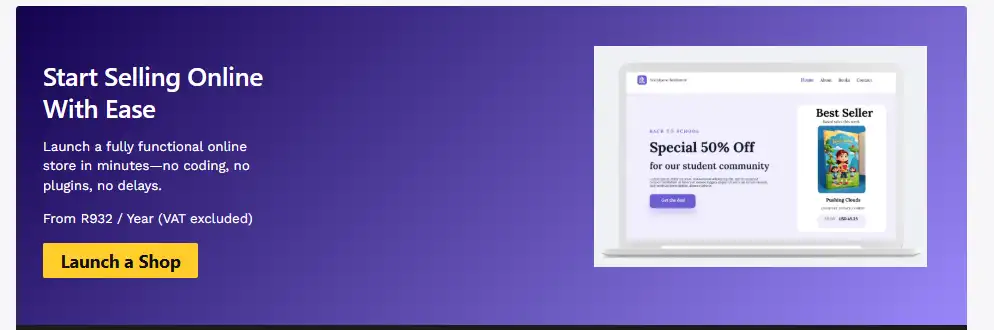
Building the store is only half the job. Even the best-designed shop won’t generate sales if nobody knows it exists yet.
Start with the customers you already have. Tell everyone who walks into your physical store, add the link to your till slips, and mention it on your existing social media pages. Your loyal customers are the easiest people to convert into your first online orders, and their reviews and shares will bring in new customers you haven’t met yet.
From there, put a small amount of effort into local search visibility. Make sure your shop’s name, address, and product categories are listed clearly on your website, since South African shoppers often search for products alongside their city or suburb name.
A basic Google Business Profile, paired with a well-organised online shop, does a lot of the heavy lifting without any advertising spend at all.
Paid social ads can help too, but they work best once your store is already live and taking orders. Spending on ads before your product pages, photos, and checkout flow are ready usually wastes the budget, since visitors who land on an unfinished store rarely come back to try again.
What to Sell First When You Start an Online Shop in South Africa
New online retailers often try to list their entire physical inventory on day one, and that approach usually slows the launch down. A smaller, focused product range gets your shop live faster and gives you real sales data to work from.
Start with your ten to twenty best-selling physical products. These are items you already know sell well, so you can be confident they’ll perform online too. Once orders start coming in and you have a sense of which categories your online customers prefer, you can expand your catalogue with far less guesswork than if you’d listed everything at once.
This staged approach also makes it easier to keep your photos, descriptions, and stock counts accurate. A smaller, well-maintained shop builds more customer trust than a large one full of outdated listings and missing product images.
Common Mistakes to Avoid When You Start an Online Shop in South Africa
A few mistakes show up again and again among retailers making the move online for the first time.
Using low-quality product photos. Blurry or badly lit images make even great products look untrustworthy, and shoppers scroll past them fast.
Ignoring mobile shoppers. Most South African online shopping happens on smartphones, so a store that only looks good on desktop is losing sales before a customer even reaches checkout.
Skipping product descriptions. A one-line description forces customers to guess at sizing, materials, or use, and uncertain shoppers rarely complete a purchase.
Forgetting to update stock levels. Selling an item you don’t actually have leads to refunds, complaints, and customers who don’t come back.
Avoiding these four issues alone puts your new online shop ahead of a large share of the competition.
Frequently Asked Questions
How much does it cost to start an online shop in South Africa?
With the Truehost Online Shop Builder, a full online store costs R932 a year, which covers hosting, SSL, email, and the builder itself. That’s considerably less than the R15,000 or more an agency typically charges to build a custom site from scratch.
Do I need coding skills to start an online shop in South Africa?
No. Drag-and-drop builders like ours are designed for business owners with no technical background, so you can set up your shop, add products, and go live without writing a single line of code.
What payment methods should my online shop accept?
At minimum, support card payments alongside popular local options like Ozow and SnapScan, since many South African shoppers prefer instant EFT and mobile wallets over cards.
Can I run my online shop alongside my physical store?
Yes, and most retailers should. An online shop extends your operating hours and reach without requiring you to close or scale back your physical location.
How long does it take to set up an online shop?
Once your product photos and descriptions are ready, most retailers can launch a basic online shop within a single day using a template-based builder.
Do I need to register my business before I start an online shop in South Africa?
You can technically sell as a sole proprietor, but registering with CIPC and getting a SARS tax reference number gives you more credibility with banks and payment providers. It’s worth sorting out early rather than after your first big sales month.
How many products should I list when I first launch?
once you see what your online customers actually buy.
Your Next Step
Turning your physical shop into a store that never closes isn’t a luxury reserved for big retailers anymore. It’s one of the most practical ways to protect your business against slow seasons and rising rent.
If you’re ready to start an online shop in South Africa, head over to the Truehost Online Shop Builder, choose a template built for your industry, and get your products listed today.