 Web Hosting
 Windows HostingBuilt for Windows apps and websites – stability, speed and flexibility
 Reseller HostingLaunch a hosting business without technical skills or expensive infrastructure
 Affiliate ProgramRefer customers and earn commissions from sales across our platform
 Domain SearchFind and secure a domain name in seconds with our quick lookup tool
 CO ZA Domains
 All DomainsExplore domain names from over 324 TLDs globally – all in one place
 Free Whois Lookup Tool South Africa
 VPS
VPS Website Builder
 Online ShopSet up a sleek eCommerce store with zero coding knowledge
 SSLs
SSLs SupportAccess help articles, how-tos, and everything about our services
 Blog
Blog Contact UsReach our team instantly via live chat or drop us an email
Choosing a .za domain is one of the best ways to establish a strong online presence in South Africa. A .za domain helps businesses, non-profit organizations, and individuals build credibility while showing customers they have a genuine connection to the South African market.
The .za domain is South Africa’s official country-code top-level domain (ccTLD), managed by the .za Domain Name Authority (ZADNA) and operated by the ZA Central Registry (ZACR). However, you cannot register yourname.za directly. Instead, all registrations must be made under a second-level domain (SLD) such as .co.za, .org.za, .net.za, or .web.za, each with its own registration rules and eligibility requirements.
Before registering a .za domain, it’s important to know the requirements. These include who can register a domain, the naming rules you must follow, the registration process, renewal terms, transfer policies, and other key requirements that help ensure a smooth registration.
Table of Contents
Who Can Register a .ZA Domain
The general eligibility rule is broad: a domain can be registered by any person or entity based or active in South Africa “or elsewhere,” with the specifics depending on which SLD you’re registering under.
- .co.za and .web.za are open, unrestricted namespaces. There’s no residency or citizenship requirement; South Africans and non-South Africans alike can register, and no supporting documentation is required to prove eligibility. Non-South African registrants are typically asked to consent to South African law and jurisdiction over the domain as a condition of registration.
- Restricted SLDs, such as .gov.za and .ac.za, are moderated and carry sector-specific eligibility rules; they’re reserved for government bodies and academic institutions, respectively, and registration isn’t open to the general public.
- Non-profits face no special barrier. Organizations can register freely, most commonly under .org.za or the open .co.za space.
Naming Rules: What You Can and Can’t Use
Registry naming conventions are fairly standard across the SLDs, though the exact character limit varies slightly by registrar and zone:
- Allowed characters: lowercase letters (a–z), numbers (0–9), and hyphens.
- Hyphen placement: a hyphen cannot be the first or last character of the name.
- Length: domain names generally run from 1 up to around 63 characters, though some registrar interfaces cap consumer registrations at shorter lengths (commonly cited as up to 30 characters for practical purposes).
- No internationalized characters: the .za space does not broadly support internationalized domain names (IDNs) using characters outside the standard Latin alphabet, so accented letters or non-Latin scripts aren’t an option for most SLDs.
- Short names are scarce. Most names under four characters have already been registered or are held back by the registry, so if you’re chasing a very short domain, expect limited availability.
How to Register a .ZA Domain
Registration follows a fairly linear process:
1) Pick your SLD.
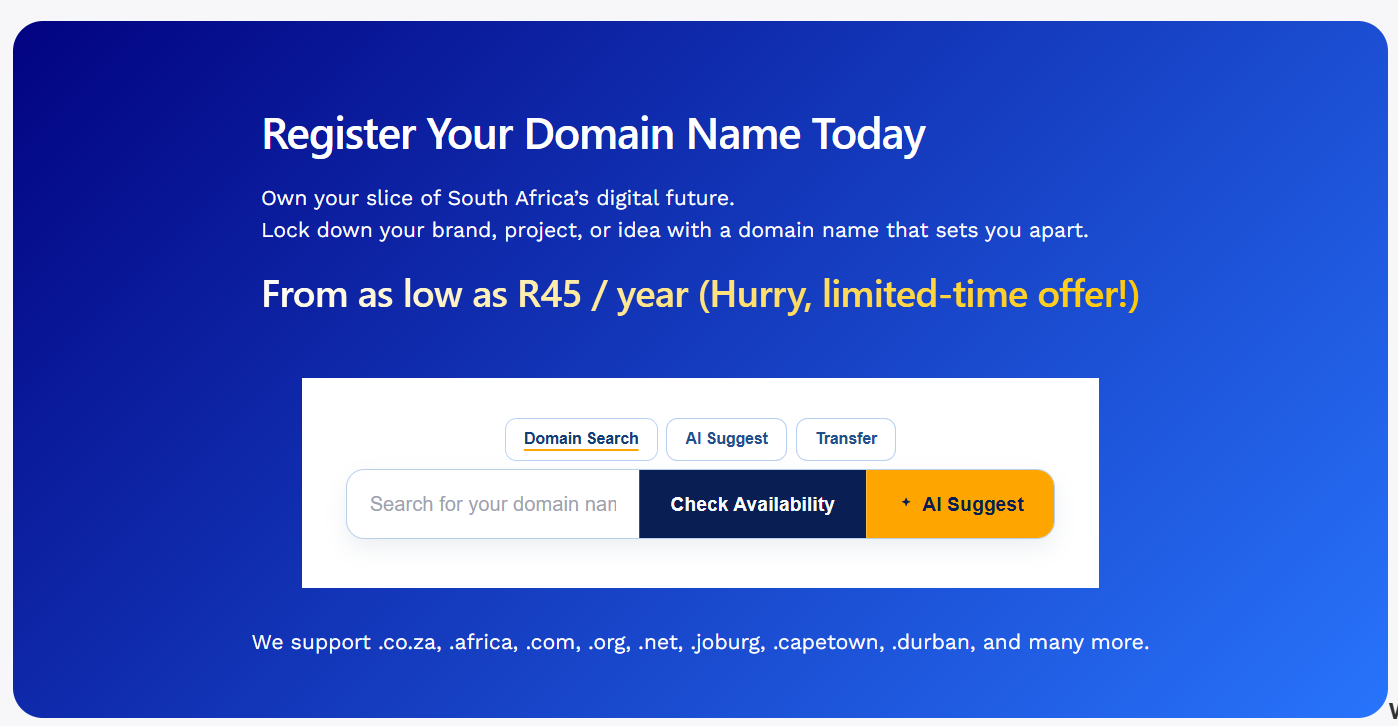
.co.za is the default for businesses; .org.za suits non-profits; .net.za is popular with ISPs and tech companies; .web.za is a flexible, unrestricted alternative; and the dotCities (.joburg, .capetown, .durban) offer a city-specific identity.
2) Check availability
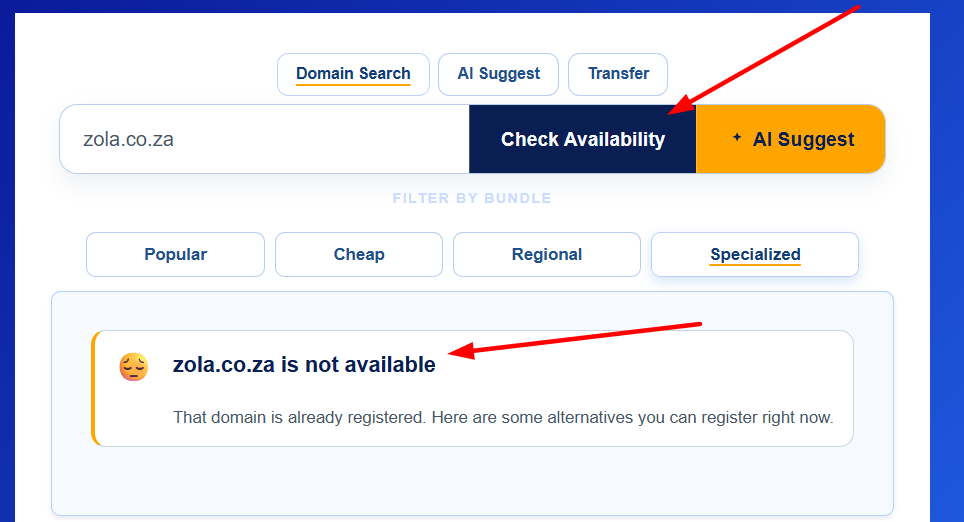
Through an accredited registrar. ZACR has accredited several hundred South African and international registrars, and a single accreditation now gives a registrar access to co.za, org.za, net.za, and web.za under the shared registry system.
3) Submit registrant details
Personal or business information, including a valid, monitored email address and phone number. This becomes your WHOIS contact record.
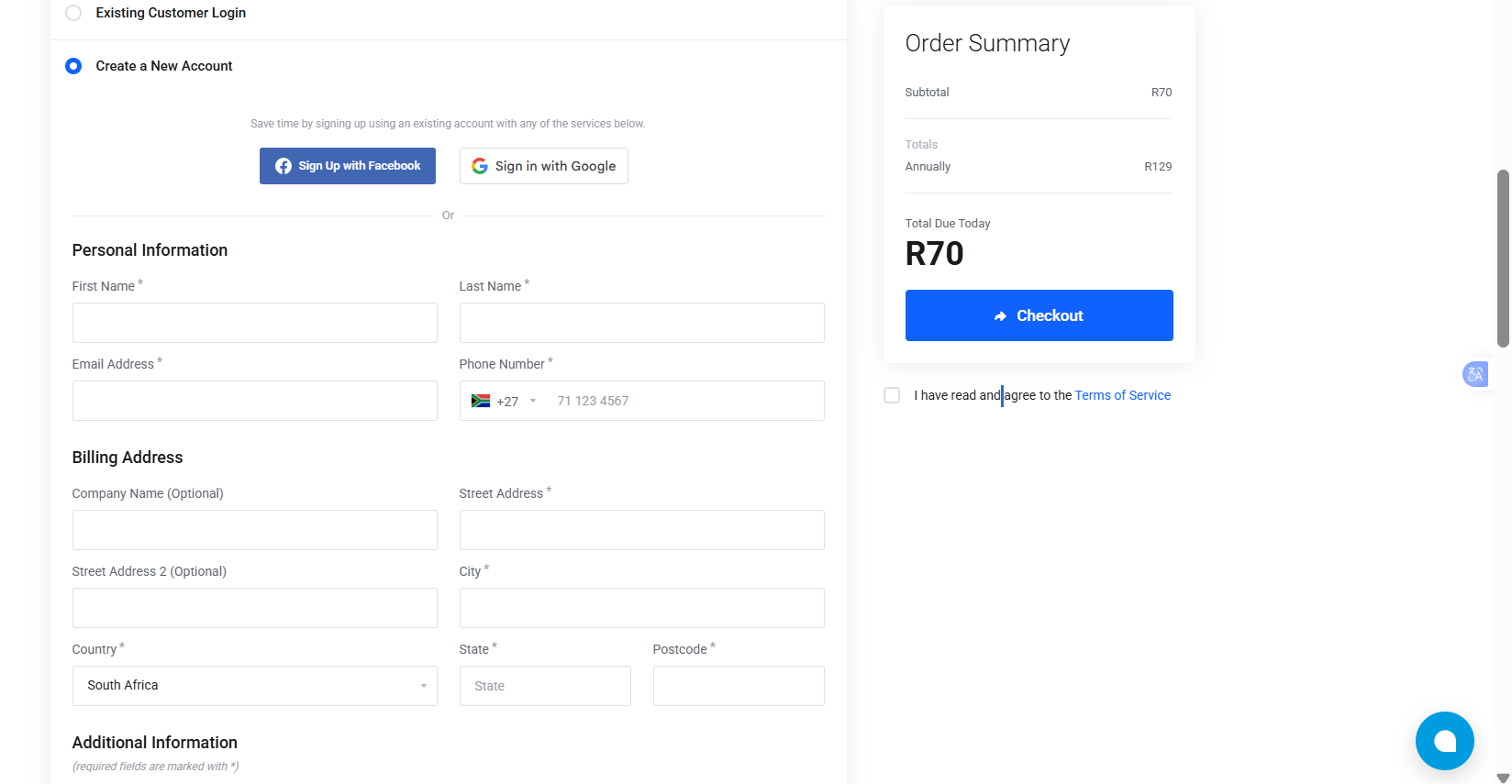
4) Complete email verification.
New .co.za registrations require the registrant to verify their email address to activate the domain, a step aimed at improving security and WHOIS data accuracy.
If verification isn’t completed, the domain is suspended and can ultimately be deleted by the registry, so it’s worth checking spam folders immediately after registering.
5) Pay the registration fee and configure DNS/nameservers.
Wait for activation. Domains are typically live almost immediately, though full propagation across the internet can take up to 48 hours.
Registrant Data and the POPIA Angle
Because registration requires handing over personal or business contact details, South Africa’s Protection of Personal Information Act (POPIA) governs how that data is handled.
Registrars and the registry are expected to collect only what’s necessary to register and manage the domain. In practice, this means your WHOIS contact information, name, email, and phone number should be accurate and kept current, since it’s used for identity verification, transfer approvals, and general compliance checks.
Unlike some other ccTLDs, there isn’t a widely available private/anonymous WHOIS option baked into most .za SLDs, so treat your registrant details as effectively public-facing.
Registration Terms, Renewal, and Costs
Registration period
.za domains aren’t sold in a single fixed term. Most registrars let you register for 1 to 5 years upfront, and the exact options, along with whether multi-year discounts are offered, depend entirely on the registrar’s own system rather than a ZADNA-wide rule.
A one-year term is the default most people choose, since it’s the cheapest way to secure a name while you build out a site or brand.
Ongoing validity and renewal
A .za registration doesn’t expire on its own the way a lease might. It stays valid indefinitely, provided it’s renewed on schedule; there’s no cap on how many times a domain can be renewed or how long a single registrant can hold it. The cost structure typically has two distinct stages:
- An initial registration fee is charged when you first secure the name.
- A recurring annual renewal fee, charged every year afterward (or upfront for multi-year terms) to keep the domain active.
It’s worth noting that registration and renewal pricing are often not the same figure; many registrars use a lower first-year price to win new customers, then bill a higher rate at renewal. This is standard industry practice across most TLDs, not something specific to .za, but it’s easy to miss if you only look at the sign-up price.
Grace period and expiry
If a domain isn’t renewed by its expiry date, it doesn’t disappear immediately. It typically enters a grace period, during which the original registrant can still renew it, usually at the normal renewal price, though some registrars add a late fee the closer you get to the end of the window. Once the grace period lapses without renewal, the name is released back into the public pool and becomes available for anyone, including competitors, to register.
Actual .za pricing (indicative, current market rates)
Prices for .za domains vary by registrar, and many run limited-time promotions on the first-year registration price, so treat any single figure as indicative rather than fixed. As an example of current retail pricing, Truehost lists the following rates for South African SLDs, in South African Rand (ZAR), inclusive of VAT:
| Domain | Register (1st year) | Renew (per year) | Transfer |
| .co.za | R45 | R85 | R0 |
| .org.za | R70 | R129 | R0 |
| .net.za | R70 | R70 | R0 |
| .web.za | R70 | R70 | R0 |
| .africa | R320 | R320 | R320 |
| .za.com | R421 | R4,133 | R7,779 |
For comparison, generic TLDs from the same registrar run roughly R150/R230 for .com and R150/R200 for .org, so a .co.za domain is often the cheapest option on the table for a South African business, at least at this registrar.
A few things worth understanding about these numbers:
- The register price is frequently a promotional rate. R45 for .co.za, for instance, is advertised as a limited-time offer.
- Domain transfers to a new registrar are commonly free (R0) for open .za SLDs, since the fee structure for .za is separate from the standard ICANN transfer fee model used for gTLDs like .com.
- .za.com is a different product entirely; it’s a commercial third-level domain sold by CentralNic rather than a ZADNA-regulated SLD, which is why its pricing looks nothing like .co.za, .org.za, or .net.za.
- Secondary costs aren’t included. Hosting, email hosting, SSL certificates, and website builder add-ons are billed separately and are a common way registrars make up margin on cheap headline domain pricing.
- Prices change often. Registrars adjust promotional and renewal pricing regularly, so always check the live price at your chosen registrar’s checkout before assuming any figure, including the ones above, is current.
Transfers and Ownership Changes
Transferring a .za domain, whether between registrars or between owners, runs through a cooperative process involving both parties’ registrars:
- Once a transfer request is submitted, the registrar processes it at the registry level, and the registry (via ZADNA/ZACR systems) emails every listed WHOIS contact (Owner, Admin, Tech, and Billing) to confirm.
- At least one contact must approve the transfer for it to proceed.
- The transfer fails if any contact actively denies it, or if there’s no response at all within 5 days of the request.
- Selling a domain is permitted; there’s no specific rule in the .za framework preventing the resale or transfer of ownership of a registered domain.
Meeting .ZA Domain Requirements for a Successful Registration
Registering a .za domain is a straightforward process when you understand the requirements. Choosing the right second-level domain (SLD), following the naming rules, providing accurate registrant information, completing the required email verification, and renewing your domain on time will help ensure your registration remains active and secure.
Once you’ve met these requirements, you’re ready to claim a domain name that reflects your brand and establishes a strong online presence in South Africa.
Ready to secure your .za domain? Browse available domain names and register yours today with Truehost.
ZA Domain Name Requirements: FAQs
Can I register a .za domain privately or anonymously?
Not in the way some other domains allow. WHOIS contact details are required as part of registration and are treated as the accurate record of ownership, so full private registration is generally not available across the open SLDs.
Can anyone register a .za domain?
For open SLDs like .co.za and .web.za, yes, both South Africans and non-South Africans can register, usually agreeing to South African jurisdiction in the process. Restricted SLDs like .gov.za and .ac.za are limited to qualifying government and academic entities.
What country uses the .za domain?
South Africa. The “.za” code comes from the country’s official ISO designation rather than an abbreviation of “South Africa” itself, a naming quirk shared with several other country codes.
Is a .za domain good for SEO?
For businesses targeting a South African audience specifically, yes, country-code domains are commonly treated as a geographic relevance signal, which can help visibility in local search results.
How long can I register a .za domain for?
Typically between 1 and 5 years at a time, renewable annually (or in multi-year blocks) indefinitely thereafter.
What happens after the grace period ends?
If the domain still hasn’t been renewed once the grace period expires, it’s released back into the pool and becomes available for anyone else to register, including competitors watching for expired names.