 Web Hosting
 Windows HostingBuilt for Windows apps and websites – stability, speed and flexibility
 Reseller HostingLaunch a hosting business without technical skills or expensive infrastructure
 Affiliate ProgramRefer customers and earn commissions from sales across our platform
 Domain SearchFind and secure a domain name in seconds with our quick lookup tool
 CO ZA Domains
 All DomainsExplore domain names from over 324 TLDs globally – all in one place
 Free Whois Lookup Tool South Africa
 VPS
VPS Website Builder
 Online ShopSet up a sleek eCommerce store with zero coding knowledge
 SSLs
SSLs SupportAccess help articles, how-tos, and everything about our services
 Blog
Blog Contact UsReach our team instantly via live chat or drop us an email
Most hosting businesses compete on price alone. But that’s a race to the bottom.
The global hosting market was worth close to $193 billion in 2025, and it’s growing fast. More providers means more noise. More noise means thinner margins if you only sell space on a server.
That’s the trap. Over 330,000 hosting providers are chasing the same customers with the same shared hosting plans. If your pitch is ‘we’re cheaper,’ someone will always undercut you.
You don’t have to play that game.
This guide shows you seven creative ways to make money with your web hosting business, without slashing your rates.
These are practical revenue layers you can build on top of what you already offer. Let’s get into it.
Table of Contents
1) Niche Hosted Solutions for Specific Industries
Generic hosting is a commodity. Anyone can sell ’10GB storage, unlimited email.’
Niche hosting is different. When you solve a specific industry’s problem, you’re not competing on price anymore. You’re competing on relevance.
A restaurant owner doesn’t want ‘hosting.’ They want a site that takes bookings and shows the menu. A coach doesn’t want ‘hosting.’
They want a booking calendar and a membership area. An online shop owner wants a WooCommerce environment that’s already tuned for speed.
Here’s what a turnkey niche package can look like:
- Pre-installed software stack for the industry
- One-click setup, no technical steps for the client
- Support staff who actually understand that industry’s needs
- A pricing tier that reflects the added value, not just server space
Examples worth building around:
- Restaurants: booking system + digital menu page
- Coaches and consultants: membership platform + booking tool
- E-commerce sellers: WooCommerce-optimised hosting environment
The payoff is real. Niche clients pay a premium because you’ve removed their setup headache.
They also churn less, because switching means rebuilding a working system. And happy niche clients refer other people in the same industry, which is free marketing for you.
If your infrastructure can handle heavier workloads, this is also where VPS hosting earns its keep.
A shared plan struggles once a booking system or online shop gets busy. A VPS plan gives that client the resources to grow without downtime.
2) Reseller and White-Label Hosting
Reseller hosting is one of the simplest ways to make money with your web hosting business.
Here’s how it works. You buy hosting resources wholesale from a provider like us at Truehost. Then you resell that space under your own brand name. Your customer never sees ‘Truehost’ anywhere, they see you.
Who should you target?
- Web designers who need hosting for client projects
- Marketing agencies managing multiple client sites
- Freelancers who want a recurring income stream, not just one-off project fees
The reseller hosting market alone is projected to grow from $5.2 billion in 2024 to $9.8 billion by 2031. That’s real demand from small agencies who don’t want to run their own servers.
What should you highlight when you sell this?
- WHMCS billing, so clients get automated invoices under your brand
- Full cPanel/WHM access to manage every account
- Branded nameservers, so it truly looks like your infrastructure
This model works because it’s low-risk for you. You’re not maintaining physical servers.
You’re not troubleshooting hardware failures at 2am. You’re managing accounts and collecting monthly payments.
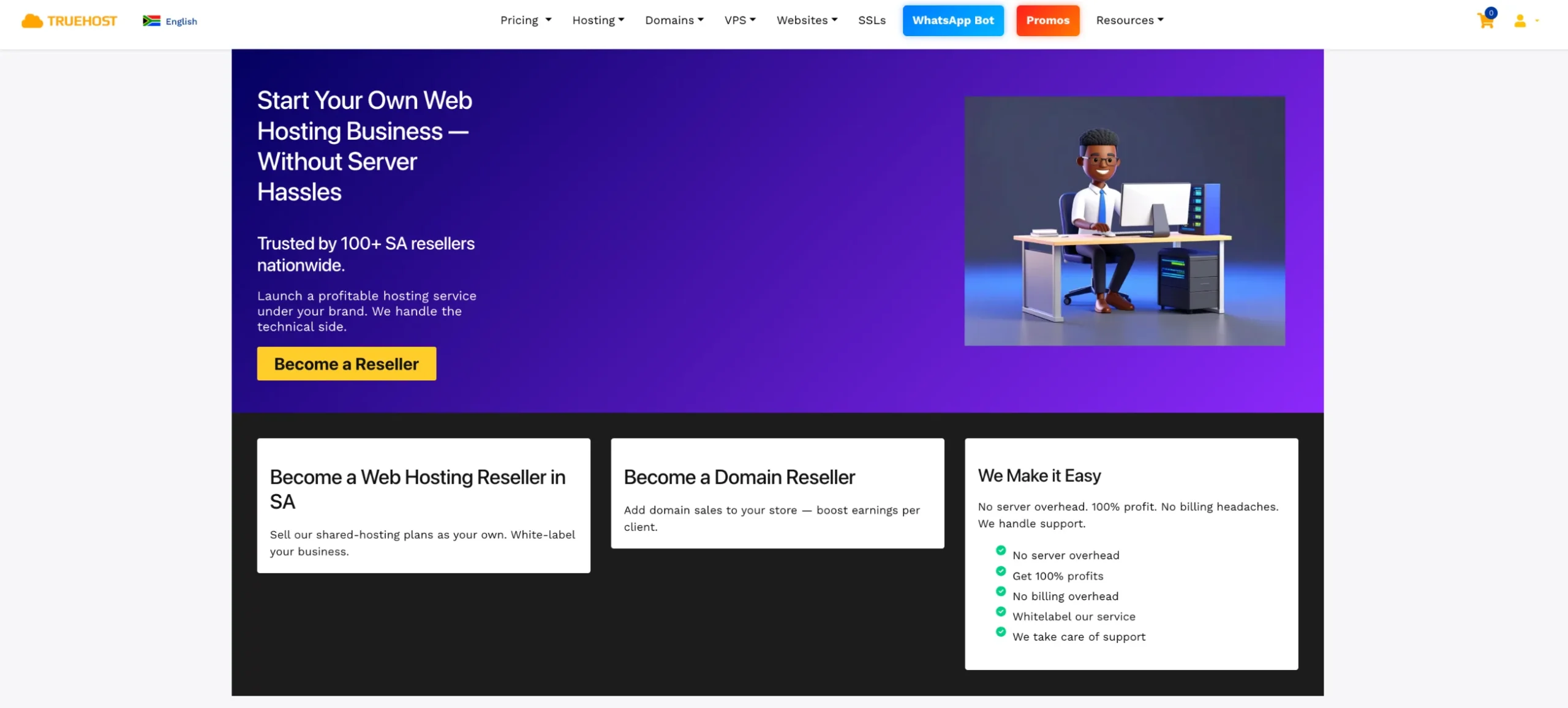
We at Truehost built our reseller hosting plans specifically for this. If you already have client relationships from design or marketing work, this is often the fastest strategy to add on.
3) Bundle Hosting With Complementary Services
Bundling works because of simple psychology. Customers don’t want to shop for five separate tools. They want one decision, made once.
Strategic bundling can lift sales by around 20% and profit by around 30%, according to McKinsey research on bundling strategy (FasterCapital). In e-commerce specifically, well-built bundles tend to raise average order value by 20–30% (Swell).
Hosting is no different. A bundle raises what each customer is worth to you, without you doing extra work per sale.
Structure your bundles in tiers. Each tier should feel like an obvious upgrade, not a confusing add-on list.
Entry-level bundle:
- Free domain (first year)
- SSL certificate
- Professional email
- Website builder
- CDN for faster load times
Mid-tier bundle:
- Everything in entry-level
- Daily backups
- Malware removal
- Basic SEO tools
Premium bundle:
- Everything in mid-tier
- Priority support
- Staging environment
- Monthly performance reports
Each tier should feel like a natural next step. Not a confusing list of add-ons.
This is also where you can point customers toward your current hosting plans. Show them what’s included at each price point.
We keep our own hosting plans structured this way simple entry point, clear upgrade path.
4) Premium Managed Services and Retainers
Here’s a mindset shift that changes your whole business: stop selling ‘space on a server.’ Start selling ‘I run everything for you.’
The managed hosting market was valued at $129,134.66 million in 2024 and is projected to reach $817,158.33 million by 2035. That growth tells you something. Businesses want outcomes, not infrastructure.
Services you can offer as premium add-ons:
- Site migrations from other hosts
- Ongoing maintenance and updates
- Security patching and monitoring
- Custom development work
- Uptime monitoring with fast response
Pricing models to consider:
- Monthly retainer, predictable income for you, predictable cost for them
- One-time project fee, good for migrations or single builds
Who buys this? Small and medium businesses without an in-house IT person. Agencies that want to outsource the technical backend so they can focus on design and strategy.
A retainer model is the strongest option long-term. It turns a one-time hosting sale into a relationship.
Once a client trusts you with their server, they rarely move that responsibility elsewhere.
5) AI-Powered Tools and Performance Add-Ons
Demand for AI features inside hosting is growing quickly. Industry analysis shows more than half of new hosting and application-hosting product innovations now centre on AI-driven automation, monitoring, and security.
That’s your upsell opportunity. Clients already expect smart caching, content tools, and chatbot integrations. Charge for them.
Add-ons worth offering:
- Speed optimisation audits
- AI-powered security suites
- Automated server resource scaling
Here’s the positioning trick. Don’t sell these as ‘technical upgrades.’ Sell them as performance insurance.
A slow site loses customers. A vulnerable site loses trust. Frame the add-on around the risk it removes, not the tech behind it.
Keep your claims grounded. Only promote AI tools that your own stack actually supports. If a client asks how it works, you should be able to explain it simply.
This is where we at Truehost lean on our own infrastructure. Our OpenClaw hosting and AI Workers give clients real automation, not a marketing buzzword.
If a client is running workflow automation, our n8n hosting is a natural fit too. These aren’t hype add-ons, they’re tools people are actively searching for.
6) An In-House Marketplace for Themes, Plugins, and Digital Products
Build a small storefront inside your client dashboard or hosting panel. This is easier than it sounds, and it opens a new revenue stream that doesn’t need new customers, just more from the ones you already have.
Two ways to earn from it:
- Revenue share or commission on third-party products (themes, plugins)
- Direct sales on products you build or license yourself
What sells well in this kind of marketplace:
- Premium WordPress themes
- Plugin bundles for common needs (SEO, forms, backups)
- Starter site templates for specific industries
There’s a loyalty angle here too. Customers who buy add-ons from you are customers who feel invested in your platform. They’re less likely to shop around when renewal time comes.
This works best once you already have an active client base. You don’t need hundreds of products. A handful of genuinely useful ones, clearly displayed, is enough to start.
7) High-Ticket Affiliate and Partnership Revenue
Your clients already need tools beyond hosting. Page builders. Email marketing platforms. Backup services. Security plugins. Recommend the ones you trust, and get paid for it.
Commission ranges on these tools can be substantial. Elementor’s affiliate program pays 45% to 65% commission per sale, with payouts of up to $799 per referral depending on the plan and your tier.
Kit, formerly known as ConvertKit, pays 30% recurring commission on every paying subscriber you refer, for as long as they stay subscribed.
Where should you place these recommendations?
- A “Recommended Tools” section inside the client dashboard
- A dedicated resource page on your site
One rule is more important than the rest: only promote what your business actually uses or has properly vetted. Your clients trust your judgment. That trust is worth more than any single commission.
Affiliate income is passive once it’s set up. But it isn’t instant. It compounds as your client base and content grow.
Get Your Business Started With Truehost
These seven strategies aren’t side hustles. They’re revenue layers, built on top of what you already offer as a hosting provider.

You don’t need to launch all seven at once. Start with one or two that fit your current setup best.
A designer with client relationships might start with reseller hosting. An agency running client sites might start with premium managed retainers.
Once the first strategy is generating steady income, layer in the next one. Scale as your confidence and client base grow.
Ready to build the infrastructure behind any of these strategies? Check our reseller hosting plans and start turning your hosting business into a diversified income source.
Make Money With Your Web Hosting FAQs
Is web hosting a good side hustle?
Yes, if you approach it as a service business, not just a reseller storefront.
Hosting alone has thin margins at small scale. But reselling, bundling, and offering managed services around hosting can turn it into solid part-time or full-time income.
How much can you realistically earn from a web hosting business?
It depends heavily on your strategy. Basic reseller accounts might bring modest monthly income at first. Managed service retainers and niche packages usually earn far more per client, because you’re charging for expertise, not just server space.
Growth tends to come from stacking multiple revenue streams, reseller accounts, bundles, and affiliate income together.
Do I need technical skills to start a hosting business?
Basic technical comfort helps, but you don’t need to be a systems engineer. Reseller hosting handles most of the backend work for you. cPanel and WHM interfaces are built to be manageable without deep server knowledge.
You will need to learn the basics of client support, billing, and your chosen niche’s needs.
What’s the best way to get your first hosting clients?
Start with people you already know, local businesses, your own network, or a specific niche you understand well.
Niche positioning helps here. It’s easier to convince a restaurant owner you understand their needs than to compete for generic “cheap hosting” searches against big players.
How do I compete with big hosting companies like GoDaddy or Bluehost?
Don’t compete on price. Compete on service, specialisation, and relationship.
Big providers can’t offer personal support to every small business. You can. Niche packages, managed retainers, and local knowledge are advantages a massive company can’t easily replicate.
Can I make passive income from web hosting?
Some parts of this business are passive, like affiliate commissions and marketplace revenue share. Others, like managed services, require ongoing work.
A realistic mix includes both. Passive streams for steady background income, active services for higher-margin growth.
What’s the difference between reseller hosting and white-label hosting?
Reseller hosting is the technical setup, you buy hosting resources wholesale and resell them.
White-label hosting refers to the branding side, the customer sees your business name, not the underlying provider’s. In practice, most reseller hosting is sold white-label, so the two terms are often used together.